Congestive Heart Failure Burial Insurance
Having Congestive Heart Failure doesn’t automatically disqualify you from burial insurance, but applying the wrong way can cost your family thousands. These congestive heart failure-approved policies I help people with pay out quickly to cover burial or cremation costs, or provide a tax-free legacy for your loved ones.
Congestive Heart Failure Key Insights
- Stability Is The Key: Insurance companies look for at least 24 months without hospital visits or major medication changes.
- Prescription History Tells Your Story: Underwriters confirm control and severity by checking for the consistent use of daily maintenance medications like diuretics and beta-blockers.
- Guaranteed issue plans: These serve as a reliable safety net if you have had recent hospitalizations, need help with activities of daily living, or require home oxygen.
- Total Health Outlook: Insurers evaluate comorbidities such as diabetes or kidney disease before determining your final premium and eligibility.
- CICA Life Best Case Offer: This is the top choice because they are the only carrier that may offer first-day coverage for those with stable heart failure.
More carriers may eventually offer expanded immediate-coverage options for people with Congestive Heart Failure. Most people will have no trouble qualifying for and affording an instant-approval policy.
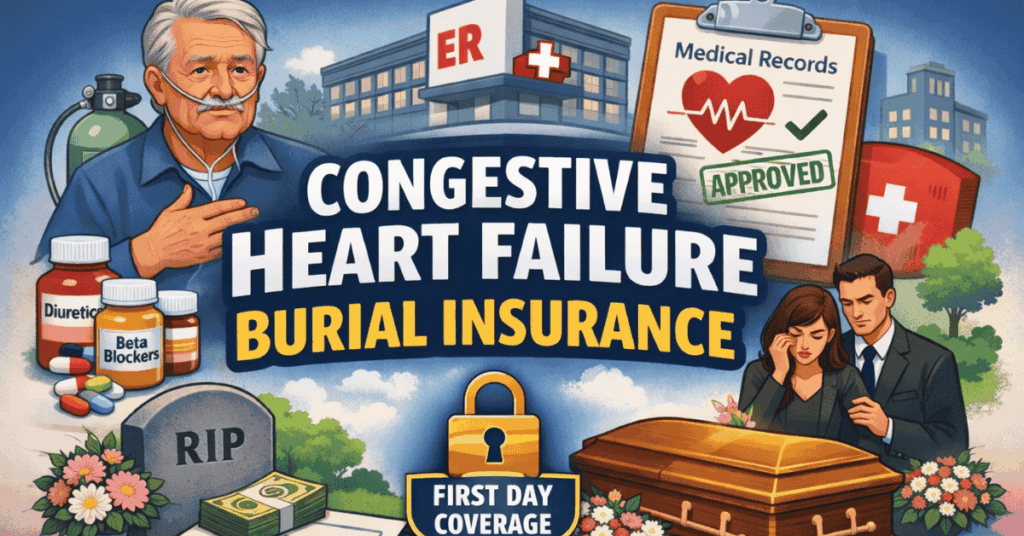
Congestive Heart Failure Medical Definition & Health Risks
Insurance company underwriters judge your risk based on your recent hospital visits and records to see how well you are living with a weak heart. Congestive Heart Failure means your heart muscle is too tired or stiff to pump blood through your body the way it is supposed to work. This causes fluid to build up in your lungs, legs, and feet, making it hard to breathe or move easily. If your heart is not managed well, it can lead to organ damage or sudden cardiac events, which is why insurers closely monitor your stability.
Congestive Heart Failure Underwriting Basics
- Testing & Test Results: Carriers look for regular checkups and a history of stable heart function. They check for recent ER visits or flare-ups that required intravenous medications, as these signal that the condition is currently uncontrolled.
Taking your heart medicine at the same dose for a long time shows the insurance company that your weak heart is stable and well managed.
- Why it Matters: If your doctor has kept your treatment plan the same for 2 years without needing to increase your dosage, you move into a better risk class with lower monthly costs.
Congestive Heart Failure Prescription Medication Classes
- Diuretics (Water Pills): Lasix or Furosemide help remove extra fluid from your body and lungs.
- Beta-Blockers: Metoprolol or Carvedilol help lower your blood pressure and slow your heart rate, reducing stress.
- ACE Inhibitors: Lisinopril or Enalapril help relax your blood vessels so blood flows more easily.
Congestive Heart Failure with Comorbidities
Multiple health problems at the same time change your total insurance risk because a weak heart often happens alongside other serious problems like diabetes, kidney disease, or past strokes. Having several medical issues at once makes the insurance company look much closer at your file to see how those grouped conditions affect your life. Insurers look at your whole health picture because having multiple issues makes it harder for your body to stay stable. Getting coverage now is important because new health issues can pop up and make it harder to qualify for the best plans later.
Controlled Congestive Heart Failure qualifies people for immediate level burial insurance coverage, even with secondary health issues.
Other Common Health Issues With Congestive Heart Failure
Congestive heart failure weakens the heart’s ability to pump blood effectively, reducing oxygen delivery to organs and causing fluid buildup that strains the lungs, kidneys, and muscles. These complications can affect underwriting and policy selection when they’re present.
- Shortness of breath – Fluid buildup in the lungs limits breathing at rest and during activity.
- Chronic fatigue – Low cardiac output reduces energy and stamina for daily tasks and work.
- Fluid retention – Swelling in the legs, ankles, and abdomen increases discomfort and mobility limits.
- Exercise intolerance – Reduced blood flow makes sustained physical activity difficult or unsafe.
- Kidney dysfunction – Poor circulation impairs filtration and worsens fluid and electrolyte balance.
- Abnormal heart rhythms – Electrical instability causes palpitations, dizziness, or fainting.
- Frequent hospitalizations – Flare-ups often require urgent care and interrupt routines.
- Cognitive effects – Reduced brain perfusion affects focus, memory, and decision-making.
- Medication side effects – Diuretics and heart drugs can cause dehydration, low blood pressure, or weakness.
- Reduced work capacity – Ongoing symptoms and medical care needs limit reliability and endurance.
Understanding Congestive Heart Failure Policy Types
- Level: Level burial insurance offers 1st-day coverage and pays the full death benefit from day one. CICA Life is the best choice here if you can qualify for if you’ve been diagnosed with CHF.
- Graded: Graded burial insurance limits benefits during the 12 to 24 months for health or medical-related causes of death. Guarantee Trust Life is typically a “sure thing” for a CHF approval.
- Guaranteed Issue: Guaranteed issue burial insurance requires no health questions but includes a 2-year waiting period before it pays out for causes of death related to health or medical conditions. Gerber Life would be a fine choice for this type of plan.
Carriers offer different plan categories based on an applicant’s Congestive Heart Failure and long-term health stability.
Sample Congestive Heart Failure Rate Snapshot for $10,000 Coverage
The price you pay for burial insurance is tied directly to your age and sex because these details help the company estimate your lifespan. Women typically enjoy lower monthly rates than men because they statistically live longer, which reduces the insurance provider’s immediate risk. As you get older, the cost of a new policy goes up, so locking in a rate early is usually the best financial move.
Here are some preferred rates, but your rates can vary based on which A-rated carrier is best for your situation.
CICA LIFE LEVEL INSURANCE RATES AGE 50–85
| AGE | $10,000 | $15,000 | $20,000 | $25,000 |
|---|---|---|---|---|
| 50 | F: $31 M: $33 | F: $47 M: $50 | F: $62 M: $67 | F: $78 M: $84 |
| 55 | F: $38 M: $43 | F: $57 M: $64 | F: $77 M: $86 | |
| 60 | F: $49 M: $55 | F: $73 M: $82 | F: $98 M: $110 | |
| 65 | F: $62 M: $72 | F: $93 M: $108 | F: $124 M: $144 | |
| 70 | F: $83 M: $102 | F: $125 M: $153 | F: $167 M: $205 | |
| 75 | F: $118 M: $145 | |||
| 80 | F: $152 M: $207 | |||
| 85 | F: $213 M: $294 |
Rates may vary based on age, gender, health, and state. Click the form on this page for the lowest rates from the best carriers.
Congestive Heart Failure Underwriting & Medication History
Your prescription history proves to the insurance company how consistently you manage your health. When an underwriter sees that you take your heart pills every day without fail, they view you as a stable, lower-risk applicant who is less likely to have a sudden medical crisis. Compliance shows that you are actively managing your heart health to prevent a crisis or hospital stay. If your pill dosage has stayed the same for 24 months, you are much more likely to get first-day coverage.
Your prescription history is how the insurance carriers verify medical stability. Recent hospitalizations for crises trigger postponement rather than permanent decline.
| Health Profile | Coverage Type | Wait Period |
|---|---|---|
| Stable (No Hospital 2+ Years) | Level | None |
| Recent Treatment (12-24 Mos) | Level / Graded | 0-24 Months |
| Unable to Perform ADLs | Guaranteed Issue | 2 Years |
Real Life Congestive Heart Failure Success Stories
Real-world examples illustrate how people with Congestive Heart Failure secure day-one protection with anywhere from $5,000 to $25,000 for burial, cremation, or final expenses.
Thomas’s Story
Thomas was diagnosed with heart failure over 3 years ago, and he assumed he could only get a plan with a waiting period. After reviewing his records, I found that he had not been hospitalized and that his medications were very stable. I helped him apply with CICA Life, and he was approved for a $15,000 policy with full first-day coverage. This plan allowed him to lock in a rate 30% lower than the guaranteed-issue offers he received in the mail. Thomas can now rest easy knowing his funeral costs are completely taken care of.
Martha’s Story
Martha had a scary hospital visit for fluid in her lungs only 14 months ago and was worried about being declined. Most agents told her she had to wait 2 years for any coverage to pay out. I navigated her health history and placed her with Guarantee Trust Life for an immediate graded plan. While it wasn’t a level benefit, it provided her family with partial protection right away rather than making her wait 2 full years for a payout. Martha secured $10,000 to cover her cremation and final bills without the stress of a long waiting period.
Congestive Heart Failure Financial Ratings & Stability
A.M. Best letter grades act as a report card that proves an insurance company is financially strong enough to pay your family’s death claim. Looking at these scores alongside BBB ratings gives you a full view of both the company’s financial position and how well it treats its customers. You want a carrier with a high rating so you know they will be there to pay your family’s claim quickly when the time comes.
Insurance Carrier Ratings & Comparisons
| Carrier | A.M. Best | BBB | NAIC Complaints |
|---|---|---|---|
| Aflac | A+ (Superior) | A+ | Low |
| CICA | B++ (Good) | A+ | Low |
| Colonial Penn | A (Excellent) | A+ | High (300% Above Avg) |
| Family Benefit Life | A+ (Superior) | A+ | Low |
| Guarantee Trust Life | A (Excellent) | A+ | Low |
| Senior Life | Not Rated | A+ | High (300% Above Avg) |
| Trinity Life | A+ (Superior) | A+ | Low |
Frequently Asked Questions: Congestive Heart Failure Burial Insurance
Can you get burial insurance with Congestive Heart Failure?
Yes, you can absolutely qualify for burial insurance with CHF. While many big-name insurers decline heart failure applicants, specialized final expense carriers in 2026 often approve them. If your condition is stable and you live independently, you can qualify for a plan with simplified health questions. If your symptoms are severe or you have been hospitalized recently, you can secure a guaranteed issue plan that asks no health questions at all. Honestly, it just does not make sense to assume you are uninsurable; I help families with CHF find coverage every single day.
Is Day One burial insurance coverage available for heart failure patients?
Immediate day one coverage is available for CHF patients who meet specific stability requirements. Some specialized carriers, like CICA Life, expanded their eligibility criteria to offer level benefits (no waiting period) to individuals with managed CHF who are not currently hospitalized and have a high ejection fraction. Most standard companies will require you to be symptom-free and have no medication changes for at least 24 months to qualify for an immediate payout. I recommend we look at your recent records to see if we can skip the convenience tax of a waiting period.
How does the NYHA heart failure class affect my burial insurance options?
The New York Heart Association (NYHA) classification is the primary metric underwriters use to determine your rate class:
- Class I & II: Often eligible for simplified issue plans with immediate or graded benefits.
- Class III & IV: Usually directed toward guaranteed issue plans with a two-year waiting period, especially if shortness of breath occurs at rest or you require assistance with daily activities.
Will using home oxygen for CHF disqualify me from burial insurance?
Using home oxygen does not disqualify you from insurance coverage, but it typically triggers a mandatory two-year waiting period. Most burial insurance companies view oxygen use as a high-risk indicator. In this case, a guaranteed issue policy is your best path. It ensures your family is covered for accidental death immediately and for natural death after the 24-month mark. It is a vital safety net that keeps the insurance company’s hands out of your medical business.
Does a recent hospitalization for fluid buildup trigger a waiting period?
Yes. If you have been hospitalized for CHF or fluid on the lungs (edema) within the last 12 to 24 months, most carriers will offer a graded or modified plan. These plans typically pay out a portion of the benefit (e.g., 30% or 40%) if death occurs in the first year. After the two-year mark, the full 100% benefit is paid. This seasoning period allows the insurance company to assume the risk while still providing your family with protection.
What heart failure medications do burial insurance companies look for?
Underwriters check your prescription history for maintenance drugs to verify stability:
- Diuretics: Lasix (furosemide) or Bumex.
- Beta-blockers: Metoprolol or Carvedilol.
- ACE Inhibitors/ARBs: Lisinopril or Entresto.
Consistent use of these drugs proves you are following the doctor’s orders. However, if your dosage of Lasix has been increased significantly in the last year, it may be viewed as a sign of a flare-up, potentially leading to a graded benefit offer.
Can I get burial insurance if I have CHF and a Defibrillator (ICD)?
Yes, but the timing of the implant matters. If your ICD or pacemaker was installed more than two years ago and your heart failure is stable, you may qualify for standard rates. If it was installed within the last 24 months, you will likely be placed in a plan with a waiting period until your health is established past the surgery date.
Is there a maximum burial insurance coverage amount for seniors with CHF?
Most CHF burial policies offer between $5,000 and $25,000 in coverage. While you may find options up to $50,000 with companies like Mutual of Omaha or Lafayette Life, $10,000 to $15,000 is the industry standard for covering a traditional funeral or cremation. These small whole life policies are designed to be affordable even with a serious cardiac history.
Does burial insurance pay for death caused by a sudden heart attack?
Yes. Once the initial waiting or contestability period (usually 2 years) is over, a burial policy covers death from all natural causes. This includes sudden cardiac arrest, heart attacks, or complications from CHF. As long as you were honest on your application, the claim is guaranteed to be paid to your beneficiaries without red tape.
Why is whole life burial insurance better than term insurance for CHF?
Term insurance for heart failure patients is nearly impossible to find and eventually expires. Honestly, it just does not make sense to buy a policy that might leave you unprotected when you need it most.
Burial insurance is whole life, meaning:
- It never expires as long as premiums are paid.
- Your rates are locked in and never increase.
- It builds cash value over time.
