Diabetic Retinopathy Burial Insurance
Most seniors get easy approval for diabetic retinopathy through my simple process that handles the hard work for your family. These diabetic retinopathy-approved policies I help people with pay out quickly to cover burial or cremation costs, or provide a tax-free legacy for your loved ones.
Diabetic Retinopathy Burial Insurance Key Insights
- CICA Life is the premier choice for diabetic retinopathy because they are one of the only carriers offering 1st-day coverage for this complication.
- Avoid guaranteed issue plans if retinopathy is your only major concern, as you can often find immediate coverage without a two-year wait.
- Guarantee Trust Life serves as a vital backup for those who take mood or anxiety medications that may cause a decline with other level-benefit carriers.
- Stability is critical, and if you have upcoming eye surgeries or pending test results, it is best to wait until those are completed for the best rates.
- Comorbidities matter, so health issues like COPD or congestive heart failure must be factored into the final underwriting decision.
A few carriers have expanded immediate coverage options for seniors with controlled diabetic retinopathy. Most seniors will have no trouble qualifying for and affording an instant-approval policy.
Diabetic Retinopathy Medical Definition & Health Risks
Diabetic retinopathy is a medical condition where high blood sugar levels damage the tiny blood vessels in the back of the eye. Underwriters classify the risk level of diabetic retinopathy based on recent medical history and the presence of other diabetic complications. If left uncontrolled, this can lead to severe vision loss or blindness, signaling to insurers that diabetes is impacting your internal systems.
Life Insurance Companies Ask These Diabetes Questions
Different life insurance companies ask different questions to decide which diabetes applicants they may approve.
- Aetna Decline – Have you ever received, or been advised to receive, an organ or bone marrow transplant, or an amputation due to any disease or complications of diabetes?
- Aetna Modified – Within the past 2 years, have you been diagnosed with, received, or been advised to receive treatment or medication for complications of diabetes such as diabetic coma, insulin shock, retinopathy (eye disorder), nephropathy (kidney disorder), or neuropathy (nerve or circulatory disorder)?
- Aflac Decline – Have you ever received, or been advised to receive, an organ or bone marrow transplant, or an amputation due to any disease or complications of diabetes?
- Aflac Modified – Within the past 2 years, have you been diagnosed with, received, or been advised to receive treatment or medication for complications of diabetes such as diabetic coma, insulin shock, retinopathy (eye disorder), nephropathy (kidney disorder), or neuropathy (nerve or circulatory disorder)?
- CICA Life Level – In the past 10 years, have you opted to not seek treatment, have not taken medication, or have not followed the prescribed treatment plan following a medical diagnosis by a member of the medical profession for any one or more of the following: uncontrolled diabetes, uncontrolled high blood pressure, stroke or TIA, paralysis, congestive heart failure, heart disease, cardiomyopathy, lung disease including COPD (chronic obstructive pulmonary disease) or emphysema, liver cirrhosis or failure, kidney (renal) failure or insufficiency, or chronic kidney disease including dialysis?
- Family Benefit Life Decline – During the past 24 months, have you been treated by a medical professional for insulin shock, diabetic coma, or amputation caused by disease, or have you ever taken insulin shots prior to age 40?
- Family Benefit Life Level – Have you ever been diagnosed as having multiple sclerosis, epilepsy, schizophrenia, Parkinson’s disease, nephropathy, neuropathy, retinopathy, chronic kidney disease or failure, systemic lupus, hepatitis B or C, cirrhosis of the liver, liver disease, liver failure, or lung impairments including chronic obstructive pulmonary disease (COPD), chronic asthma, chronic bronchitis, emphysema, or fibrosis?
- Guarantee Trust Life Graded – Have you EVER been advised by a member of the medical profession to have an amputation due to complications from diabetes?
- Liberty Bankers Life Decline – Have you, the Proposed Insured, ever been diagnosed, treated, tested positive for, or been given medical advice by a member of the medical profession for diabetes at age 9 or younger?
- Liberty Bankers Life Decline – Have you, by a member of the medical profession, within the prior 2 years, been diagnosed with, or received, or been advised to receive treatment or medication for uncontrolled diabetes, uncontrolled high blood pressure, a diabetic coma or insulin shock, amputation due to diabetic complications, schizophrenia, alcohol or drug abuse, illegal use of drugs, or dependency on prescription medication?
- Liberty Bankers Life Modified – Within the past 2 years have you, the Proposed Insured, been diagnosed, treated, tested positive for, or been given medical advice by a member of the medical profession for complications of diabetes such as nephropathy (kidney), neuropathy (nerve, circulatory), retinopathy (eye)?
- Liberty Bankers Life Preferred – Have you, the Proposed Insured, by a member of the medical profession, ever been diagnosed with, or received, or been advised to receive treatment or medication for insulin dependent diabetes?
- Mutual of Omaha Graded – Has the Proposed Insured ever been diagnosed by a licensed medical professional with, received treatment by a licensed medical professional for, or been advised to seek treatment by a licensed medical professional for insulin shock, diabetic coma, amputation due to diabetic complications, End Stage Renal Disease or requiring dialysis?
- Mutual of Omaha Level – Has the Proposed Insured ever been diagnosed by a licensed medical professional with, received treatment by a licensed medical professional for, or been advised to seek treatment by a licensed medical professional for diabetes before age 45?
- Mutual of Omaha Level – Has the Proposed Insured ever been diagnosed by a licensed medical professional with, received treatment by a licensed medical professional for, or been advised to seek treatment by a licensed medical professional for; Diabetes at any age with complications or history of Retinopathy (eye), Nephropathy (kidney), Neuropathy (nerve), Peripheral Vascular Disease (PVD or PAD), Coronary Artery Disease (CAD) or Stroke?
- Trinity Life Decline – During the past 24 months, have you been treated by a medical professional for insulin shock, diabetic coma, or amputation caused by disease, or have you ever taken insulin shots prior to age 40?
- Trinity Life Level – Have you ever been diagnosed as having multiple sclerosis, epilepsy, schizophrenia, Parkinson’s disease, nephropathy, neuropathy, retinopathy, chronic kidney disease or failure, systemic lupus, hepatitis B or C, cirrhosis of the liver, liver disease, liver failure, or lung impairments including chronic obstructive pulmonary disease (COPD), chronic asthma, chronic bronchitis, emphysema, or fibrosis?
Diabetic Retinopathy Underwriting Basics
- Testing & Test Results: Insurance companies look at your A1C levels and the results of your latest dilated eye exams. They care if your vision is stable or if you have frequent flare-ups that require emergency laser treatments or injections.
Medication stability reduces the mortality risk for the insurance company. Medication stability reduces the insurance company’s mortality risk.
- Why it Matters: Your lab results and treatment history help the company decide if your condition is stable enough for immediate coverage or if a waiting period is needed.
Diabetic Retinopathy Prescription Medication Classes:
- Anti-VEGF Injections: Medications like Avastin, Eylea, or Lucentis used to stop leaking blood vessels in the eye.
- Corticosteroids: Eye drops or implants used to reduce swelling in the retina.
- Blood Sugar Control: Daily insulin or oral medications like Metformin to prevent further eye damage.
Diabetic Retinopathy with Comorbidities
Overlapping health conditions determine your total insurance risk because complications like eye damage often signal deeper issues with your heart and lung health. If you have retinopathy, underwriters will check for other issues like congestive heart failure or COPD to see if a systemic disease is causing widespread internal damage. They also look for “red flags” like needing help with bathing or dressing, as these functional limitations can change which company is best for you.
Getting coverage now is important because these health issues often travel together and can worsen over time. Controlled diabetic retinopathy qualifies seniors for immediate level burial insurance coverage, even with secondary health issues.
Other Common Health Issues With Diabetic Retinopathy
Diabetic retinopathy damages the small blood vessels in the retina due to long-term high blood sugar, impairing vision and signaling broader vascular disease that can affect underwriting and policy selection when these related issues are present.
- Blurred vision – Retinal swelling and vessel leakage reduce visual clarity and accuracy in daily tasks.
- Vision loss – Progressive vessel damage can cause partial or permanent blindness.
- Difficulty driving – Reduced visual acuity and depth perception limit safe driving.
- Poor night vision – Retinal ischemia worsens low-light vision and increases the risk of accidents.
- Floaters and dark spots – Bleeding into the eye interferes with reading and focus.
- Macular edema – Central vision swelling impairs fine detail work and screen use.
- Eye pain or pressure – Advanced disease can raise intraocular pressure and discomfort.
- Increased fall risk – Visual impairment affects balance and hazard detection.
- Treatment burden – Injections, laser therapy, and frequent exams disrupt routines and work schedules.
- Indicator of systemic disease – Retinal damage reflects widespread vascular injury tied to higher kidney and heart risk.
Understanding Diabetic Retinopathy Policy Types
Carriers offer different plan categories based on an applicant’s diabetic retinopathy and long & short-term health stability.
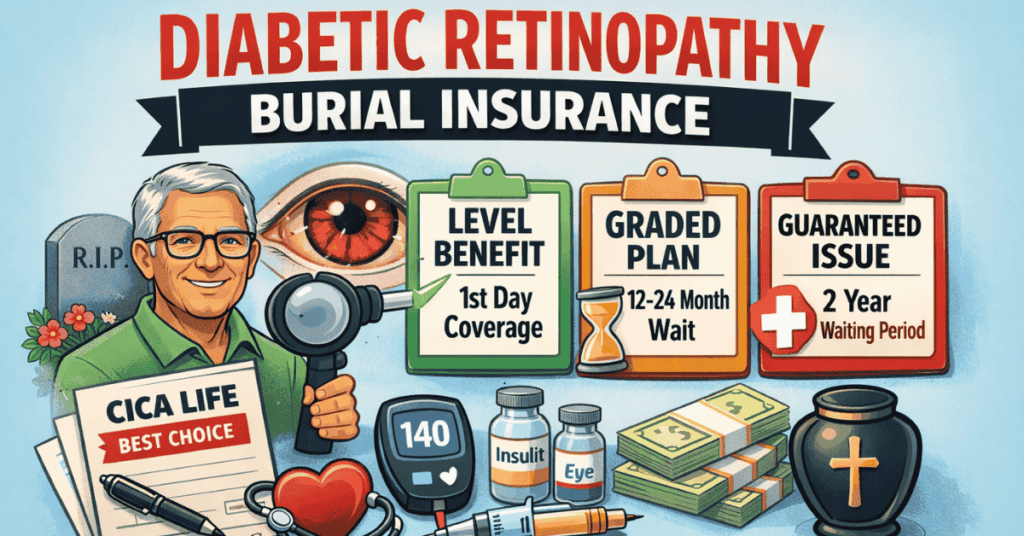
- Level: Level burial insurance offers 1st-day coverage and pays the full death benefit from day one. CICA Life is the recommended choice for level coverage because they offer 1st-day benefits and a same-day approval process for retinopathy.
- Graded: Graded burial insurance limits benefits during the 12 to 24 months for health or medical-related causes of death. Guarantee Trust Life is the best option for a graded plan if you take medications for anxiety or depression that other companies won’t accept.
- Guaranteed Issue: Guaranteed issue burial insurance requires no health questions but includes a 2-year waiting period before it pays out for health or medical-related causes of death. I do not recommend these for retinopathy alone, but Gerber Life is the best pick if you have other major issues like kidney failure.
Sample Diabetic Retinopathy Rate Snapshot for $10,000 Coverage
Age and gender determine your statistical life expectancy and directly dictate the monthly cost of burial insurance premiums. Rates vary between these groups because women statistically live longer than men, which allows insurers to spread the mortality risk over a longer period.
Here are some preferred rates, but your rates can vary based on which A-rated carrier is best for your situation.
CICA LIFE LEVEL INSURANCE RATES AGE 50–85
| AGE | $10,000 | $15,000 | $20,000 | $25,000 |
|---|---|---|---|---|
| 50 | F: $31 M: $33 | F: $47 M: $50 | F: $62 M: $67 | F: $78 M: $84 |
| 55 | F: $38 M: $43 | F: $57 M: $64 | F: $77 M: $86 | |
| 60 | F: $49 M: $55 | F: $73 M: $82 | F: $98 M: $110 | |
| 65 | F: $62 M: $72 | F: $93 M: $108 | F: $124 M: $144 | |
| 70 | F: $83 M: $102 | F: $125 M: $153 | F: $167 M: $205 | |
| 75 | F: $118 M: $145 | |||
| 80 | F: $152 M: $207 | |||
| 85 | F: $213 M: $294 |
Rates may vary based on age, gender, health, and state. Click the form on this page for the lowest rates from the best carriers.
Diabetic Retinopathy Underwriting & Medication History
Prescription history serves as a primary tool for verifying an applicant’s medical stability over time.
Underwriting Approval Secrets: If you haven’t changed your insulin or eye injection dosage in 2 years, you are considered a lower risk. Also, having a regular eye doctor you visit for checkups shows you are responsible for your health care. This stability is a “green flag” that helps get you the lowest possible price.
Short & Long Term History: Maintenance medications often show you are managing your symptoms effectively. Your prescription history is how the insurance carriers verify medical stability.
Could I Get Declined?: You might face a postponement if you have an eye surgery scheduled next week or if you are waiting on the results of a heart test. Recent hospitalizations for crises trigger postponement rather than permanent decline.
| Health Profile | Coverage Type | Wait Period |
|---|---|---|
| Retinopathy (Stable) | Level (CICA Life) | None |
| Retinopathy + Anxiety Meds | Graded (GTL) | 12-24 Months |
| Pending Surgery | Postponed | Until Recovered |
Real Life Diabetic Retinopathy Success Stories
Real-world examples illustrate how seniors with diabetic retinopathy secure day-one protection with anywhere from $5,000 to $25,000 for burial and final expenses.
Robert’s Story:
Robert was a 66-year-old with Type 2 diabetes and retinopathy who had been told by other agents he had to wait two years for coverage. He was very frustrated because he wanted his family to be protected immediately. Since he didn’t take any mental health medications, I placed him with CICA Life, which approved him the same day for a $15,000 level benefit. This saved him over $40 a month compared to the guaranteed issue plans he was looking at online. Now, his funeral costs are fully covered from day one.
Mary’s Story:
Mary was 71 and had retinopathy, but she also took a mild medication for anxiety. Because CICA Life is strict about mood medications, we used Guarantee Trust Life to get her a graded policy. This plan still gave her a much better rate than the mail-in offers she received at home. She was able to secure $10,000 for her cremation and final expenses without needing a medical exam. Mary felt much better knowing she had a quality company that understood her unique health situation.
Diabetic Retinopathy Financial Ratings & Stability
Financial ratings verify a carrier’s ability to pay death claims to beneficiaries without delay.
Understanding a company’s A.M. Best and BBB ratings ensures they will be there to pay the claim when your family needs it most. We only recommend companies that have a strong track record of solvency and customer service.
Insurance Carrier Ratings & Comparisons
| Carrier | A.M. Best | BBB | NAIC Complaints |
|---|---|---|---|
| Aflac | A+ (Superior) | A+ | Low |
| CICA | B++ (Good) | A+ | Low |
| Colonial Penn | A (Excellent) | A+ | High (300% Above Avg) |
| Family Benefit Life | A+ (Superior) | A+ | Low |
| Guarantee Trust Life | A (Excellent) | A+ | Low |
| Senior Life | Not Rated | A+ | High (300% Above Avg) |
| Trinity Life | A+ (Superior) | A+ | Low |
Frequently Asked Questions: Diabetic Retinopathy Burial Insurance
Can I get burial insurance with diabetic retinopathy?
Insurance companies approve permanent burial insurance for applicants with diabetic retinopathy because final expense carriers have expanded their rules to accept most diabetic eye complications. Most people think a diagnosis of retinopathy acts as an automatic “no” from an underwriter, but honestly, it just does not make sense to worry. While this condition shows that diabetes has begun to affect the small blood vessels in your eyes, it is not a reason for a flat-out denial. Most applicants qualify for a standard or graded plan depending on how well they manage their blood sugar. You can secure a policy that protects your family from the high cost of a funeral without jumping through corporate hoops.
Is Day One burial insurance coverage available if I have diabetic retinopathy?
Immediate first-day coverage provides a full death benefit to your beneficiaries from the moment you pay your first premium, even if you have a history of diabetic retinopathy. Several top-rated carriers do not penalize you for eye issues as long as you have avoided a diabetic coma or insulin shock for the last 2-year period. If your vision remains stable and you follow your treatment plan, you can qualify for a level benefit policy. This ensures your family receives every dollar of the death benefit if you pass away tomorrow. It is a much better deal than the “rip-off” plans that force every senior into a two-year waiting period.
Does being legally blind from diabetic retinopathy disqualify me from burial insurance?
Legal blindness does not disqualify you from burial insurance because insurance companies view vision loss as a functional impairment rather than a terminal illness. Most simplified issue applications include blindness as an acceptable condition for coverage. You can still qualify for first-day coverage, though an underwriter might ask how well you perform your daily living activities independently. The company just wants to make sure you are stable and safe in your home. Buying a policy now keeps the cost low and ensures your kids do not have to pay for your final expenses out of their own pockets.
Does using eye injections for diabetic retinopathy increase burial insurance premiums?
Using eye injections like Avastin or Eylea typically does not increase your monthly premiums because underwriters view these treatments as proactive management of your condition. It is actually better for your application to show that you visit a specialist regularly instead of leaving complications untreated. Most carriers will treat you as a standard diabetic risk as long as the injections stabilize your vision. Honestly, it just does not make sense to hide your treatment. Showing the insurance company that you are responsible helps you avoid a “convenience tax” that less-informed agents might charge you.
Will a history of laser surgery for diabetic retinopathy cause a waiting period in burial insurance?
A history of laser surgery usually does not trigger a waiting period for burial insurance because most insurers only worry about major surgeries that occurred within the last 12 months. If your photocoagulation treatment was more than a year ago and your doctor is satisfied with the results, you likely qualify for a level benefit plan. If your surgery was very recent, some carriers might offer a graded plan, but others will still grant immediate coverage once you finish healing. You should never settle for a two-year waiting period just because you had a routine eye procedure. Your family deserves full protection without unnecessary delays.
What happens if I have both retinopathy and neuropathy when applying for burial insurance?
Having both retinopathy and neuropathy indicates multi-system involvement, which might move your application from a preferred rate to a standard or modified rate class. While this combination shows the disease is moving through your body, it rarely results in a decline from the insurance company. Expert agents can find a carrier that groups all circulatory complications together, allowing you to secure a policy without a two-year waiting period. Every dollar you save by picking the right company is more money left behind for your spouse or kids. You need a carrier that understands the reality of living with diabetes.
How do burial insurance companies verify my diabetic retinopathy diagnosis?
Insurance companies verify your health history by performing a quick background check on your prescriptions and reviewing your records through the Medical Information Bureau. If the underwriter sees eye medications or frequent visits to a retinal specialist, they will match that data against your application answers. Because you do not have to take a medical exam, honesty on the questionnaire is the only way to ensure the company never contests your claim in the future. The digital scan happens in seconds, so you get an answer quickly. This transparency protects your family from legal headaches when it is time for the company to pay the check.
Can I get burial insurance if I take insulin and have retinopathy?
You can easily secure burial insurance even if you take daily insulin and have a history of retinopathy because many final expense providers are specifically “insulin-friendly.” Using insulin alongside an eye complication is extremely common in the current market. While some companies might charge a higher rate for insulin users, several specialized carriers will still offer you first-day coverage. The most important factor is the age at which you started taking the shots. If you start after age 40 or 50, you typically qualify for much better rates. This keeps your monthly bill affordable and ensures your family is not left holding the bag.
Are burial insurance rates higher for diabetic retinopathy than for standard diabetes?
Rates for applicants with retinopathy are typically slightly higher because insurers view eye damage as a sign of advanced diabetes. This usually results in a standard rating rather than a preferred one. However, the price difference is generally modest and usually costs less than a few cups of coffee per month. It is a small price to pay for the peace of mind that your funeral costs are fully covered. Honestly, it just does not make sense to wait until your health gets worse and the price doubles. Locking in your rate today is the smartest move you can make for your family.
