Esophageal Cancer Burial Insurance
Esophageal cancer doesn’t automatically disqualify you from burial insurance, but applying the wrong way can cost your family thousands. These esophageal cancer approved policies I help people with pay out quickly to cover burial or cremation costs, or provide a tax-free legacy for your loved ones.
Key Esophageal Cancer Burial Insurance Insights
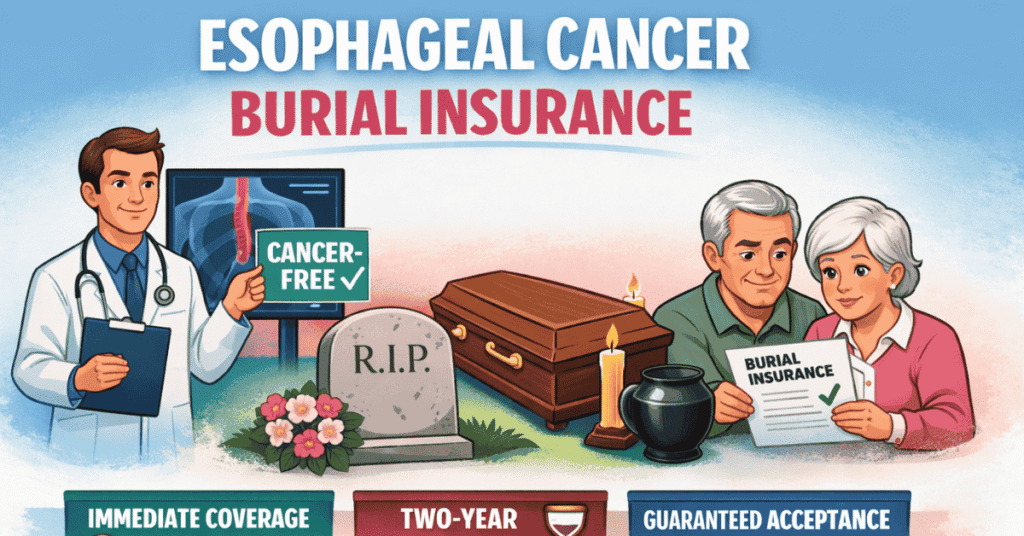
- 1st-day coverage begins the day a doctor declares you cured: CICA Life offers a rare opportunity where you can qualify for first-day coverage as soon as you are officially cancer-free.
- A two-year treatment-free window opens the most affordable rates. Most major carriers, such as Aflac and Family Benefit Life, require a 24-month cure period before offering their best plans.
- Active treatment requires a 2-year waiting period: if you are currently fighting the disease or undergoing chemotherapy, you must use a guaranteed-issue plan that pays out fully after 2 years.
- Low five-year survival rates make early enrollment vital: Because esophageal cancer is aggressive, with lower survival statistics, securing a policy today ensures your family has protection regardless of health changes.
- Functional independence determines your plan eligibility: If the cancer has hit you hard and you cannot perform daily tasks like bathing or dressing, a guaranteed-issue policy is the only path forward.
I am always on the lookout for more insurance companies that will offer affordable protection for esophageal cancer. Because of this, most people I help will have no trouble qualifying for and affording an instant approval policy.
Esophageal Cancer Burial Insurance Medical Definition & Health Risks
Underwriters determine your final expense insurance eligibility by calculating the exact number of months that have passed since your last active cancer treatment to confirm long-term stability. Esophageal cancer is a serious disease where malignant cells form in the tube connecting your throat to your stomach. If you do not control the spread, it can move to regional lymph nodes or distant organs, which creates a high mortality risk that makes insurance companies very cautious about offering immediate benefits.
Life Insurance Companies Ask These Esophageal Cancer Questions
Different life insurance companies ask different questions to decide which applicants with esophageal cancer they may approve.
- Aetna Decline – Within the past 2 years, have you been diagnosed with, received, or been advised to receive chemotherapy or radiation for any form of cancer, excluding basal cell or squamous cell skin cancer?
- Aetna Decline – Have you ever been diagnosed with more than one occurrence of the same or a different type of cancer?
- Aflac Decline – Within the past 2 years, have you been diagnosed with, received, or been advised to receive chemotherapy or radiation for any form of cancer, excluding basal cell or squamous cell skin cancer?
- Aflac Decline – Have you ever been diagnosed with more than one occurrence of the same or a different type of cancer?
- CICA Life Level – Have you been diagnosed by a member of the medical profession with more than one occurrence of any cancer, a recurrence of any cancer, metastasis of any cancer, or currently being treated for cancer (excluding basal cell or squamous cell skin cancer)?
- Family Benefit Life Decline – Within the past 24 months, have you been diagnosed or treated by a medical professional for, or taken medication for, internal cancer, leukemia, or melanoma?
- Guarantee Trust Life Graded – Within the last 24 months, have you been diagnosed by a member of the medical profession with Cancer (excluding Stage or Grade 1 Prostate Cancer, Carcinoma in Situ and Squamous Cell or Basal Cell Carcinoma) or received treatment by a member of the medical profession (excluding checkups while in remission, routine screening and maintenance medications) with radiation therapy, chemotherapy including oral medication or immunotherapy?
- Liberty Bankers Life Decline – Have you, the Proposed Insured, ever been diagnosed, treated, tested positive for, or been given medical advice by a member of the medical profession for congestive heart failure (CHF), cardiomyopathy, memory loss, Alzheimer’s, senile dementia, dementia, heart defibrillator implant, 2 or more instances of internal cancer(s), or terminal illness (“terminal illness” means a disease or illness that is expected to result in death within 24 months)?
- Mutual of Omaha Decline – Has the Proposed Insured ever been diagnosed by a licensed medical professional with, received treatment by a licensed medical professional for, or been advised to seek treatment by a licensed medical professional for Alzheimer’s Disease, Dementia, Huntington’s Disease, Sickle Cell Anemia, Myelodysplastic Syndrome (MDS), Lou Gehrig’s Disease (ALS), Hydrocephalus, Muscular Dystrophy, Quadriplegia, Paraplegia, Down Syndrome, Intellectual Developmental Disorder, Congestive Heart Failure, Cirrhosis, Metastatic Cancer or recurrent Cancer of the same type?
- Mutual of Omaha Decline – In the past 2 years, has the Proposed Insured been diagnosed with, been treated for or advised by a licensed medical professional to receive treatment for any form of cancer (except basal or squamous cell skin cancer)?
- Mutual of Omaha Level – In the past 4 years, has the Proposed Insured been diagnosed by a licensed medical professional with, received treatment by a licensed medical professional for, or been advised to seek treatment by a licensed medical professional for Cancer, Leukemia, or any other internal cancer or melanoma (except basal or squamous cell skin cancer)?
- Trinity Life Decline – Within the past 24 months, have you been diagnosed or treated by a medical professional for, or taken medication for, internal cancer, leukemia, or melanoma?
Esophageal Cancer Burial Insurance Underwriting Basics
- Stage and Spread: Localized cancer has a higher survival rate and is much easier to treat than regional or metastatic cases.
- Last Treatment Date: Underwriters care more about when your last chemo or radiation dose ended than when you were first diagnosed.
- Current Symptoms: Trouble swallowing or unexplained weight loss are red flags that suggest the cancer is still active or returning.
The correct use of medications over time should reduce your mortality risk, allowing the insurance companies to offer you better coverage options.
Why it Matters: Your specific cancer stage and the time since your last treatment determine your policy’s risk class and monthly premium.
Esophageal Cancer Burial Insurance Prescription Medication Classes
- Chemotherapy Drugs: Common medications include Cisplatin, Fluorouracil (5-FU), and Paclitaxel.
- Targeted Therapy: Drugs such as Herceptin (Trastuzumab) are used to treat specific types of esophageal tumors.
- Acid Suppressants: High-dose proton pump inhibitors such as omeprazole or Pantoprazole are often used to manage Barrett’s esophagus or severe reflux.
Esophageal Cancer Burial Insurance With Comorbidities
Multiple health issues at the same time influence total insurance risk because the combination of several chronic diseases makes a person more likely to experience a medical crisis. Esophageal cancer is usually the most significant health issue an applicant faces, but insurers also look for secondary problems like congestive heart failure or COPD. While you are still fighting cancer, a plan like Gerber Life is the best way to secure protection.
If you have survived the cancer but now deal with life-threatening heart issues, a graded plan through Guarantee Trust Life can provide a middle ground for coverage. A past esophageal cancer diagnosis doesn’t mean you can’t get quality burial insurance right now, even with secondary health issues.
Other Common Health Issues With Esophageal Cancer
Aggressive esophageal cancer treatments often cause secondary medical complications that underwriters review when they determine your final expense insurance eligibility and monthly premium rates.
- Radiation-Induced Heart Disease: Because the esophagus sits directly behind the heart, radiation therapy can cause unintended scarring of the heart muscle or valves. Insurers look for new signs of coronary artery disease or congestive heart failure, which can appear years after your final treatment session.
- Pulmonary Fibrosis and Lung Damage: High doses of radiation or specific chemotherapy drugs (like Bleomycin) can cause permanent lung scarring. If you experience chronic shortness of breath or require supplemental oxygen, underwriters will typically shift you toward a guaranteed-issue plan.
- Esophageal Strictures: Scar tissue from surgery or radiation can narrow the esophagus, making swallowing difficult (dysphagia). While doctors can often stretch the area, underwriters view frequent “dilatations” as a sign that your condition is not yet fully stable.
- Dumping Syndrome: If your stomach was modified during surgery to replace part of your esophagus, food may pass into the small intestine too quickly. This causes rapid weight loss and nutritional deficiencies, which can lead to “red flags” in your medical records regarding your overall frailty.
- Secondary Cancers: Survivors of esophageal cancer have a statistically higher risk of developing other cancers in the mouth, throat, or lungs. Consistent follow-up scans and a history of not smoking are the best ways to prove to a carrier that you are a lower risk.
- Anastomotic Leaks and Chronic Infections: Major surgery carries a risk of “leaks” where the esophagus and stomach are reconnected. While most happen early, any history of chronic chest infections or pneumonia following surgery suggests a weakened system that underwriters evaluate closely.
A past esophageal cancer diagnosis doesn’t mean you can’t get quality burial insurance right now, even with secondary health issues.
Understanding Esophageal Cancer Burial Insurance Policy Types
Carriers offer different plan categories based on an applicant’s esophageal cancer stage and their long-term or short-term health stability.
- Level: Level burial insurance offers 1st-day coverage and pays the full death benefit from day one. I recommend CICA Life if you were just declared cured, or Aflac and Trinity Life if you have been cured for over 2 years.
- Graded: Graded burial insurance limits benefits during the 12 to 24 months for health or medical-related causes of death. I recommend Guarantee Trust Life if you have other significant health issues along with your cancer history.
- Guaranteed Issue: Guaranteed issue burial insurance requires no health questions and includes a 2-year waiting period before benefits are paid for health or medically related causes of death. I recommend Gerber Life if you are currently in treatment or have trouble with daily activities.
Sample Esophageal Cancer Rate Snapshot for $10,000 Coverage
The monthly cost for your burial insurance increases every year you wait because your age is the primary factor used to calculate the insurance company’s risk. Rates vary by age and gender because women statistically live longer than men, which allows insurance companies to offer them lower monthly rates.
Here are some preferred rates, but your rates can vary based on which A-rated carrier is best for your situation.
TRINITY LIFE & FAMILY BENEFIT INSURANCE RATES AGE 50–85
| AGE | $10,000 | $15,000 | $20,000 | $25,000 |
|---|---|---|---|---|
| 50 | F: $21 M: $27 | F: $31 M: $39 | F: $40 M: $52 | F: $50 M: $64 |
| 55 | F: $26 M: $32 | F: $38 M: $47 | F: $49 M: $62 | F: $61 M: $78 |
| 60 | F: $32 M: $41 | F: $47 M: $61 | F: $62 M: $80 | F: $77 M: $100 |
| 65 | F: $41 M: $53 | F: $60 M: $79 | F: $79 M: $104 | F: $99 M: $130 |
| 70 | F: $52 M: $69 | F: $76 M: $102 | F: $101 M: $135 | F: $126 M: $169 |
| 75 | F: $71 M: $96 | F: $106 M: $143 | F: $140 M: $190 | F: $175 M: $237 |
| 80 | F: $104 M: $145 | F: $155 M: $217 | F: $207 M: $288 | F: $258 M: $360 |
| 85 | F: $155 M: $192 | F: $231 M: $287 | F: $307 M: $382 | F: $384 M: $477 |
Rates may vary based on age, gender, health, and state. Click the form on this page for the lowest rates from the best carriers.
Esophageal Cancer Burial Insurance Underwriting & Medication History
Your prescription history provides insurance carriers with a reliable way to verify your medical stability by confirming whether you are taking active chemotherapy or maintenance medications. Managing your health through regular checkups is a positive sign for underwriters. One insider tip is to finish all pending tests or procedures before you apply, so you can present a clean bill of health to the carrier. If you are currently in the hospital, it is best to wait until you are discharged unless you are applying for a guaranteed-issue plan that ignores hospital stays.
Your prescription history is how the insurance carriers verify medical stability by reviewing your past and current cancer-related medications.
| Health Profile | Coverage Type | Wait Period |
|---|---|---|
| Cured 2+ Years | Level | None |
| Newly Cured | Level (CICA) | None |
| Active Treatment | Guaranteed Issue | 2-year period |
Real Life Esophageal Cancer Burial Insurance Success Stories
Real-world examples illustrate how people with esophageal cancer can get day-one protection with anywhere from $5,000 to $25,000 for burial, cremation, or funeral expenses.
James’s Story
James beat esophageal cancer three years ago after a long battle with radiation and surgery. He thought no one would ever give him first-day coverage because his survival was once in doubt. Since he had been treatment-free for over 2 years, I helped him find a plan with Family Benefit Life. He obtained a $15,000 policy that pays in full from the first day. This coverage allowed him to protect his wife from funeral costs while saving him 30% compared to higher-risk plans.
Martha’s Story
Martha was diagnosed with esophageal cancer last month and is currently in the hospital for treatment. She wanted to make sure her family had money for her cremation, no matter what happened next. I set her up with a Gerber Life guaranteed-issue plan that accepted her immediately, without asking any health questions. Even though there is a two-year waiting period for natural death, her family is guaranteed to get every penny of her premiums back, plus 10% interest if she passes away early. She feels much better knowing her final wishes are funded.
Esophageal Cancer Financial Ratings & Stability
Financial ratings verify that an insurance carrier has sufficient capital to pay death claims by assessing its total cash reserves and long-term stability. A.M. Best ratings show if a company is financially strong enough to pay your family’s claim even twenty years from today.
The Better Business Bureau tracks how well a carrier handles customer service and claims for families in need. We also use the NAIC to monitor complaints and ensure the company complies with all applicable state insurance regulations to protect you.
Insurance Carrier Ratings & Comparisons
| Carrier | A.M. Best | BBB | NAIC Complaints |
|---|---|---|---|
| Aflac | A+ (Superior) | A+ | Low |
| CICA | B++ (Good) | A+ | Low |
| Colonial Penn | A (Excellent) | A+ | High (300% Above Avg) |
| Family Benefit Life | A+ (Superior) | A+ | Low |
| Guarantee Trust Life | A (Excellent) | A+ | Low |
| Senior Life | Not Rated | A+ | High (300% Above Avg) |
| Trinity Life | A+ (Superior) | A+ | Low |
Frequently Asked Questions: Esophageal Cancer Burial Insurance
Can I get burial insurance if I have esophageal cancer?
Insurance companies offer burial insurance to individuals with esophageal cancer through “Guaranteed Issue” plans that require no medical exams or health questions. These policies guarantee acceptance to all applicants, regardless of cancer stage or current treatment status, making them an essential option for those currently fighting the disease. However, because the insurer assumes greater risk, these plans almost always include a two-year waiting period during which the full benefit is paid only for accidental deaths.
How does a history of Barrett’s Esophagus affect burial insurance?
Barrett’s Esophagus is viewed by underwriters as a significant “pre-cancerous” marker that can influence whether you qualify for immediate first-day coverage. If your medical records show the condition is stable and managed with high-dose acid suppressants (such as Omeprazole), many carriers will still offer you their best “Level” rates. However, if recent biopsies have shown “high-grade dysplasia,” some insurers may treat the condition as an active cancer diagnosis and require a two-year waiting period.
Can esophageal cancer survivors qualify for first-day coverage?
Esophageal cancer survivors can qualify for immediate first-day coverage if they have been officially declared “cancer-free” and have completed all treatments at least two years ago. Some specialized providers, such as CICA Life, may consider applicants for immediate benefits once they receive a “cured” status from their oncologist. For most major carriers, reaching the 24-month treatment-free milestone is the key to bypassing waiting periods and securing lower monthly premiums.
What type of death is not covered by esophageal cancer insurance?
Insurance policies for esophageal cancer patients exclude deaths resulting from suicide during the first two years or deaths that occur during the commission of a felony. Additionally, if an applicant intentionally hides an active diagnosis or a recent hospitalization for an aggressive tumor on their application, the carrier may deny the claim for misrepresentation. Beyond these specific legal and fraud exclusions, the policy provides a tax-free payout for all natural and accidental causes of death.
How do burial insurance companies track medications like Fluorouracil (5-FU)?
Insurance companies monitor your prescription history through national databases to see when you last filled chemotherapy drugs like Fluorouracil or targeted therapies like Herceptin. Underwriters use the date of your last filled “active treatment” medication to determine when your official remission period begins. If your records show you are only taking maintenance drugs like acid suppressants, you have a much better chance of qualifying for a plan that offers immediate protection.
Is esophageal cancer considered a terminal illness for burial insurance?
Esophageal cancer is classified as a terminal illness by insurers if a physician provides a written prognosis that life expectancy is 12 to 24 months or less. If you receive this specific medical classification, you will be restricted to a “Guaranteed Issue” plan, as traditional underwriters cannot accept the high risk of a near-term claim. However, having a terminal diagnosis does not prevent you from being accepted; it simply ensures you are placed in a policy designed for high-risk medical situations.
Does radiation-induced lung damage affect burial insurance eligibility?
Radiation-induced lung damage (pulmonary fibrosis) is a secondary condition that can shift your burial insurance eligibility toward a “Graded” or “Guaranteed Issue” plan. If the scarring is severe enough to require supplemental oxygen or to prevent you from walking short distances, insurers consider it a permanent “activity of daily living” restriction. If the damage is mild and doesn’t affect your independence, you may still qualify for a “Level” plan with some specialized carriers.
Why should I use an independent broker for esophageal cancer insurance?
An independent broker can shop your specific medical case across dozens of A-rated companies to find the one with the most lenient rules for esophageal cancer survivors. Since some companies look back five years for a cancer history while others only look back two, a broker can often find you a “Level” plan with immediate coverage that you might have missed. This specialized advocacy is the most effective way to secure the highest death benefit at the lowest possible monthly rate.
