Pacemaker Burial Insurance
Having a Pacemaker doesn’t automatically disqualify you from burial insurance, but applying the wrong way can cost your family thousands. These pacemaker-approved policies I help people with pay out quickly to cover burial or cremation costs, or provide a tax-free legacy for your loved ones.
Pacemaker Burial Insurance Insights
- The 24-month marker: This timeframe is the primary boundary between high-cost plans with waiting periods and many 1st-day coverage low-rate plans. CICA Life is often the one exception for 1st-day coverage within less than 24 months.
- Pending tests: Unresolved cardiac procedures or upcoming consultations will typically limit you to a guaranteed issue plan. Most companies require all tests to be finished and results known before offering their best rates.
- Device stability: A consistent heart rhythm and a correctly functioning device allow me to place you with top-rated companies. These carriers prioritize applicants who have shown no complications after surgery.
- Prescription history: Underwriters use pharmacy records to verify your cardiac health. They look for consistent use of maintenance medications to demonstrate that your condition is medically stable and well-managed.
- Carrier selection: Choosing the right company is the most important factor. Every provider has different rules for pacemaker timelines, and some are much more lenient regarding recent battery changes or implants.
More carriers have expanded immediate-coverage options for people with pacemakers. Most people will have no trouble qualifying for and affording an instant-approval policy.
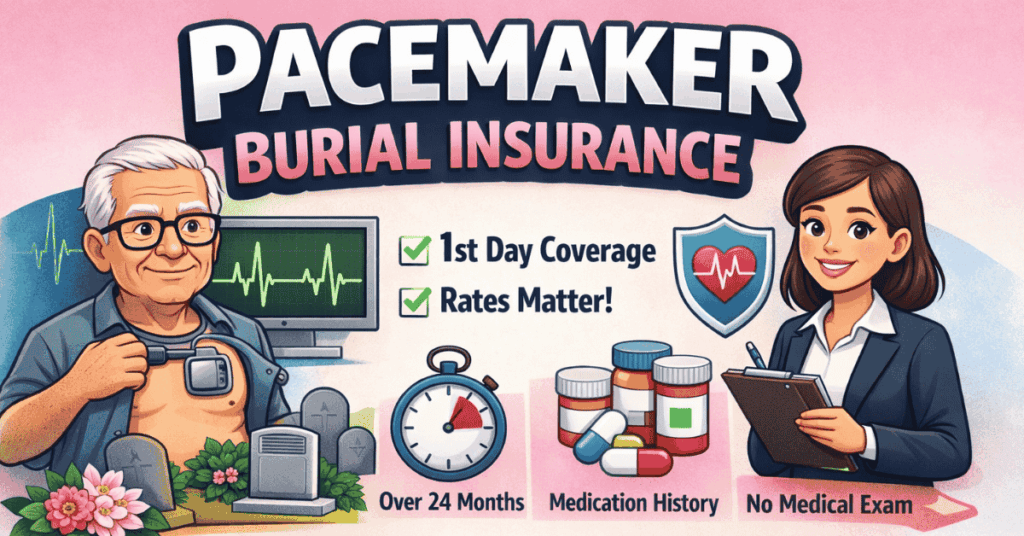
Pacemaker Medical Definition & Health Risks
Insurance companies view a pacemaker as a helpful safety net rather than a major health crisis, because the device effectively manages your heart rhythm. Underwriters focus on the original reason you needed the device and how long it has been since your surgery to decide your rate. While the device manages your rhythm, it also signals to the insurance company that you have an underlying heart condition. Poor control of this condition can lead to fainting or heart failure, which increases the risk of a claim.
Life Insurance Companies Ask These Pacemaker Questions
Different life insurance companies ask different questions to decide which applicants with a pacemaker they may approve.
- Aetna Decline – Have you ever been diagnosed with, received, or been advised to receive treatment or medication for congestive heart failure, pulmonary fibrosis, any terminal condition, or end-stage disease?
- Aetna Decline – Have you ever been diagnosed with, received, or been advised to receive treatment or medication for cerebral palsy, cystic fibrosis, muscular dystrophy, or un-operated heart defects?
- Aetna Modified – Within the past year, have you been diagnosed with, received, or been advised to receive treatment for angina (chest pain), heart attack, cardiomyopathy, or any type of heart or circulatory procedure or surgery?
- Aetna Level – Within the past 2 years, have you been diagnosed with, received, or been advised to receive treatment for angina (chest pain), heart attack, cardiomyopathy, or any type of heart or circulatory procedure or surgery?
- Aflac Decline – Have you ever been diagnosed with, received, or been advised to receive treatment or medication for congestive heart failure, pulmonary fibrosis, any terminal condition, or end-stage disease?
- Aflac Decline – Have you ever been diagnosed with, received, or been advised to receive treatment or medication for cerebral palsy, cystic fibrosis, muscular dystrophy, or un-operated heart defects?
- Aflac Modified – Within the past year, have you been diagnosed with, received, or been advised to receive treatment for angina (chest pain), heart attack, cardiomyopathy, or any type of heart or circulatory procedure or surgery?
- Aflac Standard – Within the past 2 years, have you been diagnosed with, received, or been advised to receive treatment for angina (chest pain), heart attack, cardiomyopathy, or any type of heart or circulatory procedure or surgery?
- CICA Life Level – In the past 10 years, have you opted to not seek treatment, have not taken medication, or have not followed the prescribed treatment plan following a medical diagnosis by a member of the medical profession for any one or more of the following: uncontrolled diabetes, uncontrolled high blood pressure, stroke or TIA, paralysis, congestive heart failure, heart disease, cardiomyopathy, lung disease including COPD (chronic obstructive pulmonary disease) or emphysema, liver cirrhosis or failure, kidney (renal) failure or insufficiency, or chronic kidney disease including dialysis?
- Family Benefit Life Decline – Have you ever been diagnosed by a medical professional with a terminal illness, end-stage disease, congestive heart failure, or cardiomyopathy?
- Family Benefit Life Decline – Within the past 12 months, have you been diagnosed by a medical professional for, or hospitalized for, a heart attack, stroke, transient ischemic attack (TIA), angina, aneurysm, or had cardiac or circulatory surgery of any kind to improve circulation to the heart or brain?
- Family Benefit Life Level – During the past 24 months, have you been diagnosed, treated, tested positive for, or given medical advice by a medical professional for a heart attack, stroke, transient ischemic attack (TIA), angina, aneurysm, or had cardiac or circulatory surgery of any kind such as a pacemaker, heart valve replacement, bypass, angioplasty, or stent implant to improve circulation to the heart or brain?
- Liberty Bankers Life Decline – Have you, the Proposed Insured, ever been diagnosed, treated, tested positive for, or been given medical advice by a member of the medical profession for; congestive heart failure (CHF), cardiomyopathy, memory loss, Alzheimer’s, senile dementia, dementia, heart defibrillator implant, 2 or more instances of internal cancer(s), or terminal illness (“terminal illness” means a disease or illness that is expected to result in death within 24 months)?
- Liberty Bankers Life Modified – Within the past 2 years have you, the Proposed Insured, been diagnosed, treated, tested positive for, or been given medical advice by a member of the medical profession for; angina (chest pain), any type of heart or circulatory surgery or disease, heart valve disorder, heart attack, or received a pacemaker or stent?
- Liberty Bankers Life Preferred – Have you, the Proposed Insured, by a member of the medical profession, ever been diagnosed with, or received, or been advised to receive treatment or medication for Chronic Obstructive Pulmonary Disease (COPD), chronic bronchitis, emphysema, irregular heartbeat, atrial fibrillation, peripheral vascular disease or peripheral artery disease?
- Mutual of Omaha Decline – Has the Proposed Insured ever been diagnosed by a licensed medical professional with, received treatment by a licensed medical professional for, or been advised to seek treatment by a licensed medical professional for; Alzheimer’s Disease, Dementia, Huntington’s Disease, Sickle Cell Anemia, Myelodysplastic Syndrome (MDS), Lou Gehrig’s Disease (ALS), Hydrocephalus, Muscular Dystrophy, Quadriplegia, Paraplegia, Down Syndrome, Intellectual Developmental Disorder, Congestive Heart Failure, Cirrhosis, Metastatic Cancer or recurrent Cancer of the same type?
- Mutual of Omaha Decline – In the past 12 months, has the Proposed Insured been diagnosed by a licensed medical professional as having heart disease or heart surgery of any kind?
- Mutual of Omaha Level – In the past 2 years, has the Proposed Insured been diagnosed by a licensed medical professional with, received treatment by a licensed medical professional for, or been advised to seek treatment by a licensed medical professional for; Coronary Artery Disease, Heart Attack, Coronary Artery Bypass Surgery, Angioplasty, Cardiomyopathy, irregular heart rhythm, Pacemaker or Valvular Heart Disease with surgical repair or replacement?
- Trinity Life Level – Have you ever been diagnosed by a medical professional with a terminal illness, end-stage disease, congestive heart failure, or cardiomyopathy?
- Trinity Life Decline – Within the past 12 months, have you been diagnosed by a medical professional for, or hospitalized for, a heart attack, stroke, transient ischemic attack (TIA), angina, aneurysm, or had cardiac or circulatory surgery of any kind to improve circulation to the heart or brain?
- Trinity Life Level – During the past 24 months, have you been diagnosed, treated, tested positive for, or given medical advice by a medical professional for a heart attack, stroke, transient ischemic attack (TIA), angina, aneurysm, or had cardiac or circulatory surgery of any kind such as a pacemaker, heart valve replacement, bypass, angioplasty, or stent implant to improve circulation to the heart or brain?
Pacemaker Underwriting Basics
Carriers evaluate your heart rhythm stability to determine your final plan eligibility.
- Testing & Test Results: Insurers check for any upcoming surgeries or battery replacements. If you have a pending test, you only qualify for a guaranteed-issue plan, so you should wait for a clean bill of health before applying.
Taking your heart medicine at the same dose for a long time shows the insurance company that your heart health is steady and under control.
- Why it Matters: This consistent history lowers your risk in the eyes of the underwriter, which often helps you qualify for better plans and lower monthly prices.
Pacemaker Prescription Medication Classes
Your prescription list helps the insurance company verify how well your heart condition is managed.
- Antiarrhythmics: Amiodarone or Multaq are used to maintain a steady heart rhythm alongside your device.
- Anticoagulants: Eliquis or Xarelto are used to prevent blood clots that can lead to strokes.
- Beta-Blockers: Carvedilol or Metoprolol are used to reduce the workload on your heart muscle.
Pacemaker with Comorbidities
Multiple health problems at the same time change your total insurance risk because a pacemaker often exists alongside other conditions like diabetes, COPD, Angina, or AFib. Having several medical issues at once causes the insurance company to look closer at your file to see how those grouped conditions affect your overall life expectancy. These comorbidities are often progressive, meaning they can lead to more heart damage as you age. It is vital to get your insurance now while you are stable because a future negative medical outcome could limit your choices to more expensive plans.
A steady pacemaker history qualifies people for immediate burial insurance coverage, even with secondary health issues.
Other Common Health Issues With Pacemakers
A pacemaker regulates abnormal heart rhythms by controlling electrical signals in the heart, stabilizing the heart rate, but also reflecting underlying cardiac disease and device-related considerations that can affect underwriting and policy selection when these issues are present.
- Underlying heart disease – The need for a pacemaker often signals conduction disorders or structural heart problems that limit stamina.
- Reduced exercise tolerance – Fixed pacing limits heart rate response during exertion and lowers peak physical capacity.
- Shortness of breath – Suboptimal pacing or progression of heart disease can impair circulation and breathing.
- Fatigue – Inadequate cardiac output or rate response reduces daily energy levels.
- Arrhythmia risk – A pacemaker controls rhythm but doesn’t prevent all abnormal heart rhythms.
- Device complications – Lead displacement or malfunction can cause dizziness, fainting, or chest discomfort.
- Infection risk – Pocket or lead infections may require prolonged treatment or device removal.
- Activity restrictions – Lifting limits and avoidance of certain equipment can affect work duties.
- Regular medical follow-up – Ongoing monitoring and device checks interrupt work and daily routines.
- Progression of heart disease – A pacemaker doesn’t stop heart muscle decline, which can worsen functional limits over time.
Understanding Pacemaker Policy Types
Carriers offer different plan categories based on an applicant’s Pacemaker history and long-term health stability.
- Level: Level burial insurance offers 1st-day coverage and pays the full death benefit from day one.
- Graded: Graded burial insurance limits benefits during the 12 to 24 months for health or medical-related causes of death.
- Guaranteed Issue: Guaranteed issue burial insurance requires no health questions but includes a 2-year waiting period before it pays out for causes of death related to health or medical conditions.
Sample Pacemaker Rate Snapshot for $10,000 Coverage
The cost of your burial insurance is based on your age and sex because these factors help the company project how many years you will keep the policy. Women generally pay lower monthly rates than men because they statistically live longer, making them a lower risk for the insurance carrier.
It is the only time in life when being a woman gives you a better price on a monthly bill. Here are some preferred rates, but your rates can vary based on which A-rated carrier is best for your situation.
TRINITY LIFE & FAMILY BENEFIT INSURANCE RATES AGE 50–85
| AGE | $10,000 | $15,000 | $20,000 | $25,000 |
|---|---|---|---|---|
| 50 | F: $21 M: $27 | F: $31 M: $39 | F: $40 M: $52 | F: $50 M: $64 |
| 55 | F: $26 M: $32 | F: $38 M: $47 | F: $49 M: $62 | F: $61 M: $78 |
| 60 | F: $32 M: $41 | F: $47 M: $61 | F: $62 M: $80 | F: $77 M: $100 |
| 65 | F: $41 M: $53 | F: $60 M: $79 | F: $79 M: $104 | F: $99 M: $130 |
| 70 | F: $52 M: $69 | F: $76 M: $102 | F: $101 M: $135 | F: $126 M: $169 |
| 75 | F: $71 M: $96 | F: $106 M: $143 | F: $140 M: $190 | F: $175 M: $237 |
| 80 | F: $104 M: $145 | F: $155 M: $217 | F: $207 M: $288 | F: $258 M: $360 |
| 85 | F: $155 M: $192 | F: $231 M: $287 | F: $307 M: $382 | F: $384 M: $477 |
Rates may vary based on age, gender, health, and state. Click the form on this page for the lowest rates from the best carriers.
Pacemaker Underwriting & Medication History
Your prescription records provide a clear paper trail that helps underwriters confirm your medical stability and medication adherence. Insurance companies often classify a recent pacemaker implant with the same risk weight as a major heart surgery, particularly if the procedure occurred recently. If your implant was more than 24 months ago, I can get you the best available rates today. For more recent surgeries, I look for graded plans to ensure you aren’t stuck with a 2-year wait when you could have had partial coverage immediately.
Your prescription history is how the insurance carriers verify medical stability. Recent hospitalizations for crises trigger postponement rather than permanent decline.
| Health Profile | Coverage Type | Wait Period |
|---|---|---|
| Implant Over 24 Months Ago | Level | None |
| Implant Within 24 Months | Level / Graded | 0-24 Months |
| Recent Hospitalization | Guaranteed Issue | 2 Years |
Real Life Pacemaker Success Stories
Real-world examples illustrate how people with a Pacemaker secure day-one protection with anywhere from $5,000 to $25,000 for their burial or cremation expenses.
Arthur’s Story
Arthur had his pacemaker installed nearly three years ago and has been stable ever since. He was worried that his daily heart medications would force him into an expensive plan. Because his surgery was past the 24-month mark, I placed him with Family Benefit Life for a $15,000 policy. Arthur received first-day coverage and locked in a rate well below the TV offers he had seen. He was thrilled that his family would not have to worry about a single cent of his funeral costs.
Martha’s Story
Martha received her pacemaker only 14 months ago, and every agent told her she had to wait two years for a payout. I knew that CICA Life is more forgiving toward recent implants, so I helped her get approved for first-day coverage right away. If her health had been more complex, I would have had Guarantee Trust Life ready as a backup to avoid a full waiting period. Martha secured $10,000 to cover her cremation and final expenses right away. She can now enjoy her time with her grandkids, knowing her business is in order.
Pacemaker Financial Ratings & Stability
A.M. Best grades act as a financial report card that confirms an insurance company has the cash reserves to pay your family’s death claim, even decades into the future. High BBB and NAIC scores complement this by demonstrating that the carrier treats customers fairly and processes claims efficiently, without unnecessary delays. These scores indicate that the company has the financial strength to pay your family’s claim without delay or excuses.
Insurance Carrier Ratings & Comparisons
| Carrier | A.M. Best | BBB | NAIC Complaints |
|---|---|---|---|
| Aflac | A+ (Superior) | A+ | Low |
| CICA | B++ (Good) | A+ | Low |
| Colonial Penn | A (Excellent) | A+ | High (300% Above Avg) |
| Family Benefit Life | A+ (Superior) | A+ | Low |
| Guarantee Trust Life | A (Excellent) | A+ | Low |
| Senior Life | Not Rated | A+ | High (300% Above Avg) |
| Trinity Life | A+ (Superior) | A+ | Low |
Frequently Asked Questions: Pacemaker Burial Insurance
Can you get burial insurance if you have a pacemaker?
Specialized final expense insurance companies approve seniors with pacemakers every day, as underwriters often view these devices as a sign of proactive heart management. I have sat with thousands of families who think a heart implant makes them uninsurable, but honestly, it just does not make sense to believe those flashy TV ads that say you need perfect health. If your doctor installed the device more than 24 months ago and your heart rhythm remains stable, you will likely qualify for the lowest rates available. You do not have to settle for a bad deal just because you have a piece of medical technology helping your heart stay in rhythm. I make sure the insurance company sees your pacemaker as a safety feature, not a reason to hike your bill.
Is Day One burial insurance coverage available for pacemaker recipients?
Stable pacemaker recipients qualify for immediate first-day coverage if the initial surgery occurred more than 2 years ago. Here is the part they do not tell you in the flashy commercials: most big-name companies want you to wait 2 years before any heart-related history is considered, but I know which carriers offer level benefits on day 1. If you haven’t had any hospitalizations or emergency room visits lately, your family can receive the full death benefit from the very first payment. This ensures your kids do not get stuck with a $15,000 funeral bill if something happens tomorrow. You pay for a full policy, and you deserve one that starts the second your check clears.
Does a pacemaker battery replacement count as a new surgery in burial insurance?
Insurance underwriters typically treat a battery replacement or generator change as a new circulatory surgery, which can reset your 2-year clock for immediate coverage.
It sounds like a minor “maintenance” visit to you, but the insurance company considers any chest-opening procedure high-risk. If you had a battery swap in the last 12 months, most carriers will try to impose a two-year waiting period. But I perform a quick background check on your prescriptions and surgical dates to find the few lenient companies that ignore battery changes. This saves you from paying a “convenience tax” that only benefits the insurance company’s bottom line.
How do burial insurance companies view the reason for the pacemaker?
Underwriters assess the underlying cause of your implant, such as atrial fibrillation or bradycardia, to determine the appropriate risk class based on your heart history. If you have a pacemaker for a slow heartbeat, most carriers will give you a “Preferred” rate that keeps more money in your pocket. But if your doctor ordered the device to manage congestive heart failure, the company will likely view you as a higher risk. Honestly, it just does not make sense to guess which company is best for your condition. I match your specific heart diagnosis with a carrier that specializes in that exact condition, so your family receives the maximum possible coverage.
What is the waiting period for burial insurance after a recent implant?
A pacemaker surgery performed within the last 12 months usually triggers a mandatory two-year waiting period for natural causes of death. If you pass away from health issues during those first 24 months, the company simply refunds your premiums plus 10% interest to your spouse or kids. This sounds like a raw deal, but accidental death still pays the full benefit starting on day 1. I always look for a “Graded” plan for my clients with recent surgeries so they can start the clock and reach full coverage as fast as possible. You protect your family’s future by locking in your age and health status today before things get more complicated.
Will a pending pacemaker surgery affect my burial insurance application?
Insurance companies will postpone your approval if a doctor has recommended a new implant, battery replacement, or heart test that you have not yet completed. Underwriters cannot calculate your risk while a major medical procedure is still “up in the air.” Honestly, it does not make sense to apply right before surgery, as the company will tell you to come back later. I recommend you finish your follow-up appointments and get a clean bill of health before we submit your paperwork. This ensures the company gives you the best price without any red tape or delays.
Does having a pacemaker increase my burial insurance monthly premiums?
A pacemaker does not automatically raise your monthly cost, but the timing of your surgery determines if you qualify for a “Preferred” or “Standard” rate. Your price locks in for life when the company issues the policy, and the carrier can never raise your rates as you age. If you wait until your heart health declines further, you will end up paying a much higher premium for the exact same amount of coverage. By acting now, you ensure your spouse has the cash they need for your final arrangements without draining their savings. Every dollar you save on premiums today is another dollar left behind for your grandkids.
Do I need a medical exam to get burial insurance with a pacemaker?
You can secure a permanent burial policy without medical exams, blood work, or needles, thanks to simplified digital underwriting. I am not going to send a stranger to your house to poke you for a blood sample. I ask a few health questions and run a quick background check on your prescriptions to provide you with an answer in minutes. This process is much faster than traditional life insurance and avoids the corporate hurdles that keep most seniors from getting protected. You get the peace of mind you need without the headache of a doctor’s office visit.
Why is whole life burial insurance better than term for heart patients?
Whole life burial insurance provides a permanent guarantee that your coverage will never expire or increase in price as long as you pay the premium. Term insurance is a rip-off for seniors with heart issues because the policy eventually ends, often right when you need it most. If you outlive a term policy, you are left with zero coverage and a health profile that makes buying a new plan nearly impossible. Honestly, it just does not make sense to “rent” your life insurance when you can own it forever. A whole life policy ensures your family always has a check waiting for them, no matter how long you live.
