Quick Answer
Yes, burial insurance with PTSD is more available than most people think, and insurance companies don’t automatically decline you. Most people who manage their PTSD with consistent treatment can get first-day coverage with no 2-year waiting period. An inpatient psychiatric stay in the last 2 years may limit your immediate options. If your condition is so severe that you need help with bathing or dressing, guaranteed issue, with its 2-year waiting period, is the logical choice.
Here’s What This Means for You:
- PTSD doesn’t automatically disqualify you from burial insurance
- Severity and stability of your condition affect approval and pricing
- Severe symptoms or suicide history can limit or block better options
- Guaranteed issue plans cost more and delay payouts for 2 years
- Many people assume denial when approval is still possible
- Not comparing companies can leave you paying more for less coverage
GET MY QUOTEor call 888-862-9456
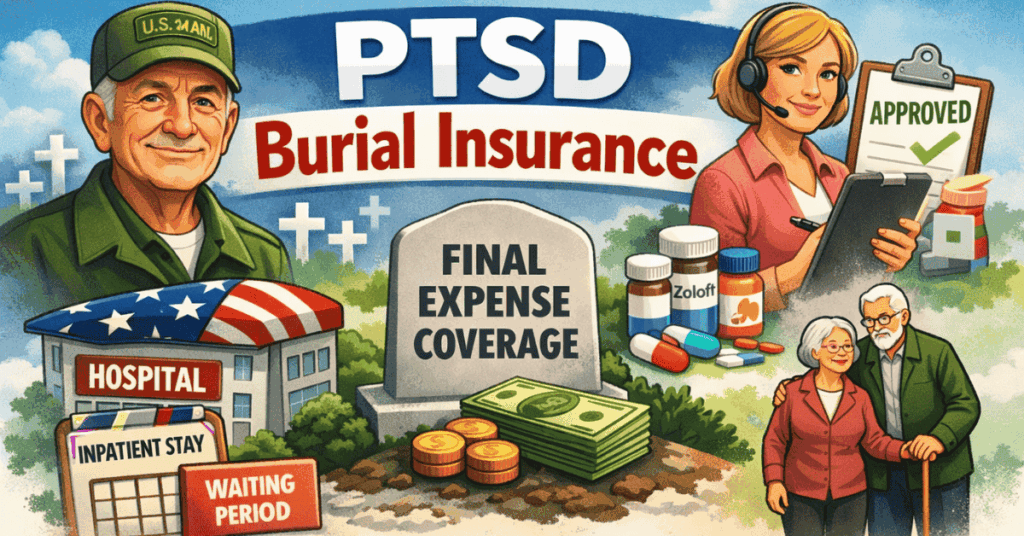
PTSD burial insurance key insights
- Stable PTSD Qualifies for Day-One Coverage: Most people who manage their PTSD with consistent treatment can secure first-day protection. Carriers like Trinity Life and Family Benefit Life accept this diagnosis for immediate benefits, with no 2-year waiting period.
- Diagnosis Source Doesn’t Change Rates: Whether PTSD stems from a car accident, a personal loss, or any other life trauma, underwriters focus on your stability. They prioritize your current mental and physical health over the cause of the condition.
- Routine Medications Are a Positive Sign: Taking standard maintenance prescriptions like Zoloft or Paxil consistently tells the insurance company that you are managing your health responsibly. This stability helps me lock in lower, preferred rates for your family.
- Independence Secures the Best Prices: As long as you can handle daily activities like dressing and eating without help, you typically qualify for standard age-based pricing. High rates are usually only triggered if the condition causes severe physical limitations in quality of life.
- Hospitalization History is the Main Hurdle: If you have had an inpatient psychiatric stay in the last 2 years, your immediate options may be limited. However, once you pass that 2-year milestone, the door reopens for level plans with no waiting period.
More carriers expanded immediate-coverage options for seniors with controlled PTSD. Most seniors will have no trouble qualifying for and affording an instant-approval policy.
PTSD medical definition & health risks
Insurers use recent medical history and treatment stability to classify the risk level associated with PTSD. Because PTSD is a mental health condition that stems from past trauma, it can put a persistent strain on the heart and nervous system through the continuous release of stress hormones, which underwriters assess for long-term cardiovascular impact. If you do not keep the symptoms under control, they can lead to debilitating anxiety or chronic sleep issues.
Underwriters look for stability because they want to know you can live your life without a constant threat of a medical crisis.
Life insurance companies ask these PTSD or mental conditions questions
Different life insurance companies ask different questions to decide which applicants with PTSD or mental conditions they may approve.
- Aetna Decline – Do you use a wheelchair or mobility scooter, or do you have any physical or mental impairment requiring assistance from another person with activities of daily living such as taking medications, bathing, dressing, eating, toileting, getting in or out of bed or chair, or moving about?
- Aetna Decline – Have you ever been diagnosed with, received, or been advised to receive treatment or medication for alzheimer’s disease, dementia, or mental incapacity?
- Aflac Decline – Do you use a wheelchair or mobility scooter, or do you have any physical or mental impairment requiring assistance from another person with activities of daily living such as taking medications, bathing, dressing, eating, toileting, getting in or out of bed or chair, or moving about?
- Aflac Decline – Have you ever been diagnosed with, received, or been advised to receive treatment or medication for Alzheimer’s disease, dementia, or mental incapacity?
- Family Benefit Life Decline – Have you ever been diagnosed by a medical professional for, or taken medication for, dementia, Alzheimer’s disease, mental incapacity, Down syndrome, Huntington’s disease, Lou Gehrig’s disease (ALS), cystic fibrosis, cerebral palsy, muscular dystrophy, or sickle cell anemia?
- Family Benefit Life Level – Have you ever been diagnosed as having multiple sclerosis, epilepsy, schizophrenia, Parkinson’s disease, nephropathy, neuropathy, retinopathy, chronic kidney disease or failure, systemic lupus, hepatitis B or C, cirrhosis of the liver, liver disease, liver failure, or lung impairments including chronic obstructive pulmonary disease (COPD), chronic asthma, chronic bronchitis, emphysema, or fibrosis?
- Guarantee Trust Life Graded – Are you CURRENTLY bedridden, confined to a hospital, nursing home, mental care facility, long term care facility, hospice or have you been diagnosed with an end-stage or terminal illness, or been told by a medical professional that you have less than 12 months to live?
- Liberty Bankers Life Decline – Have you, the Proposed Insured, ever been diagnosed, treated, tested positive for, or been given medical advice by a member of the medical profession for; organ transplant (other than corneal), bone marrow transplant, stem cell treatment, kidney failure or dialysis, muscular dystrophy, mental incapacity, amyotrophic lateral sclerosis (ALS) or Lou Gehrig’s disease, Down’s syndrome, cystic fibrosis, pulmonary fibrosis, or Huntington’s disease?
- Liberty Bankers Life Decline – Have you, by a member of the medical profession, within the prior 2 years, been diagnosed with, or received, or been advised to receive treatment or medication for uncontrolled diabetes, uncontrolled high blood pressure, a diabetic coma or insulin shock, amputation due to diabetic complications, schizophrenia, alcohol or drug abuse, illegal use of drugs, or dependency on prescription medication?
- Mutual of Omaha Decline – Has the Proposed Insured ever been diagnosed by a licensed medical professional with, received treatment by a licensed medical professional for, or been advised to seek treatment by a licensed medical professional for; Alzheimer’s Disease, Dementia, Huntington’s Disease, Sickle Cell Anemia, Myelodysplastic Syndrome (MDS), Lou Gehrig’s Disease (ALS), Hydrocephalus, Muscular Dystrophy, Quadriplegia, Paraplegia, Down Syndrome, Intellectual Developmental Disorder, Congestive Heart Failure, Cirrhosis, Metastatic Cancer or recurrent Cancer of the same type?
- Mutual of Omaha Level – In the past 2 years, has the Proposed Insured been hospitalized by a licensed medical professional for any mental or nervous disorder?
- Mutual of Omaha Level – In the past 4 years, has the Proposed Insured been diagnosed by a licensed medical professional with, received treatment by a licensed medical professional for, or been advised to seek treatment by a licensed medical professional for Bipolar Depression, Schizophrenia, Parkinson’s Disease or Multiple Sclerosis?
- Trinity Life Decline – Have you ever been diagnosed by a medical professional for, or taken medication for, dementia, Alzheimer’s disease, mental incapacity, Down syndrome, Huntington’s disease, Lou Gehrig’s disease (ALS), cystic fibrosis, cerebral palsy, muscular dystrophy, or sickle cell anemia?
- Trinity Life Level – Have you ever been diagnosed as having multiple sclerosis, epilepsy, schizophrenia, Parkinson’s disease, nephropathy, neuropathy, retinopathy, chronic kidney disease or failure, systemic lupus, hepatitis B or C, cirrhosis of the liver, liver disease, liver failure, or lung impairments including chronic obstructive pulmonary disease (COPD), chronic asthma, chronic bronchitis, emphysema, or fibrosis?
PTSD underwriting basics
Independent living status proves your medical stability to the insurance company.
- Testing & Test Results: Companies look for a 2-year window without emergency room visits or mental health confinements. They view “controlled” status as being functional in daily life, while “uncontrolled” status involves recent inpatient facility stays.
Medication stability over time reduces the insurance company’s perceived mortality risk, often allowing you to qualify for better coverage.
- Why it Matters: Your prescription history is the primary tool underwriters use to place you in a risk class. If you have used the same stable regimen for years, you look like a much safer bet to the insurance company.
PTSD prescription medication classes
- SSRIs: Doctors frequently prescribe Zoloft or Paxil to balance daily mood and anxiety.
- SNRIs: Medications like Effexor target both depression and chronic stress signals.
- Prazosin: This specific pill helps many veterans and trauma survivors manage intense nightmares.
- Anti-anxiety Meds: Prescriptions like Xanax or Ativan handle acute flare-ups but can signal a higher risk if used excessively.
PTSD with comorbidities
Insurers evaluate your entire health profile to determine how multiple conditions simultaneously increase your total insurance risk. Because PTSD rarely occurs in isolation and is often paired with high blood pressure, sleep apnea, or heart disease, underwriters must assess how these interconnected health issues impact your long-term stability. Insurers get worried when these stack up because the stress from PTSD can make a physical heart condition much worse.
If you are juggling multiple health issues, you need to lock in a policy now before another diagnosis closes the door on first-day coverage. In my experience, controlled PTSD qualifies seniors for immediate level burial insurance coverage, even with secondary health issues.
Other common health issues with PTSD
PTSD disrupts the brain’s stress and fear regulation systems, leading to persistent psychological and physical symptoms that affect sleep, mood, behavior, and overall functioning, and those related issues can affect underwriting decisions and policy selection when they’re present.
- Chronic anxiety and hypervigilance – Constant threat awareness causes tension, irritability, and difficulty concentrating.
- Sleep disturbances – Nightmares and insomnia reduce recovery, energy, and daily performance.
- Depression – Ongoing emotional strain lowers motivation, focus, and overall quality of life.
- Substance use issues – Alcohol or drug use may develop as coping mechanisms and worsen health risks.
- Cognitive difficulties – Problems with memory, attention, and decision-making interfere with work and daily tasks.
- Emotional dysregulation – Anger outbursts, mood swings, and emotional numbness strain relationships and stability.
- Physical health problems – Chronic stress increases risk for heart disease, high blood pressure, and chronic pain.
- Social withdrawal – Avoidance behaviors reduce social interaction and support systems.
- Work limitations – Triggers, stress tolerance issues, and concentration problems limit job options and consistency.
- Increased suicide risk – Severe or untreated PTSD raises risk of self-harm and crisis events.
Understanding PTSD policy types
Carriers offer different plan categories based on an applicant’s PTSD and long-term and short-term health stability.
- Level: Level burial insurance offers first-day coverage and pays the full death benefit from day one. I prioritize Trinity Life, Family Benefit Life, and Aflac for my clients who have been stable for at least 2 years.
- Graded: Graded burial insurance limits benefits during the 12 to 24 months for health or medical-related causes of death. This is the fallback if you have had a recent hospitalization or medication change.
- Guaranteed Issue: Guaranteed issue burial insurance requires no health questions but includes a 2-year waiting period before it pays out for causes of death related to health or medical conditions. Gerber Life is the logical choice if your condition is so severe that you need help with bathing or dressing.
Sample PTSD rate snapshot for $10,000 coverage
Insurers use age-based pricing to determine the cost of burial insurance premiums based on your current health and life expectancy. Waiting to purchase coverage is often compared to missing a train, as premiums increase every year and will never be as affordable as they are today. Female rates stay lower because women statistically live longer, but every year you wait increases your monthly bill.
Here are some preferred rates, but your rates can vary based on which A-rated carrier is best for your situation.
Trinity Life & Family Benefit insurance rates age 50–85
| AGE | $10,000 | $15,000 | $20,000 | $25,000 |
|---|---|---|---|---|
| 50 | F: $21 M: $27 | F: $31 M: $39 | F: $40 M: $52 | F: $50 M: $64 |
| 55 | F: $26 M: $32 | F: $38 M: $47 | F: $49 M: $62 | F: $61 M: $78 |
| 60 | F: $32 M: $41 | F: $47 M: $61 | F: $62 M: $80 | F: $77 M: $100 |
| 65 | F: $41 M: $53 | F: $60 M: $79 | F: $79 M: $104 | F: $99 M: $130 |
| 70 | F: $52 M: $69 | F: $76 M: $102 | F: $101 M: $135 | F: $126 M: $169 |
| 75 | F: $71 M: $96 | F: $106 M: $143 | F: $140 M: $190 | F: $175 M: $237 |
| 80 | F: $104 M: $145 | F: $155 M: $217 | F: $207 M: $288 | F: $258 M: $360 |
| 85 | F: $155 M: $192 | F: $231 M: $287 | F: $307 M: $382 | F: $384 M: $477 |
Rates may vary based on age, gender, health, and state.
PTSD underwriting & medication history
Insurers use prescription history to verify an applicant’s medical stability and overall risk. When you take your medications consistently, the insurance company views your adherence as a sign that your condition is well-managed and under control. Underwriters love seeing a “boring” medical file where nothing has changed in years. It proves that you are managing your health responsibly, which allows me to argue for the best possible rates for your family.
Your prescription history is how the insurance carriers verify medical stability. Recent hospitalizations for crises trigger postponement rather than permanent decline.
| Health Profile | Coverage Type | Wait Period |
|---|---|---|
| Military-Related PTSD | Level (Day 1) | None |
| Recent Inpatient Care | Graded/GI | 2 Years |
| Significant ADL Issues | Guaranteed Issue | 2 Years |
Real life PTSD success stories
Real-world examples illustrate how seniors with PTSD secure day-one protection with anywhere from $5,000 to $25,000 for burial and final expenses.
David’s story
David was a 68-year-old Army veteran who had carried the weight of PTSD since his time in Vietnam. He was worried that his long list of VA medications would make him a “decline” for any decent plan. I sat down with him and looked at his stable history. I placed David with Trinity Life because they have a huge respect for veterans and offer immediate coverage for PTSD. He qualified for a $15,000 policy to cover his funeral and leave a small gift for his daughter. David saved 15% on his monthly costs compared to the junk mail offers he had been receiving.
Maria’s story
Maria was 64 and managed PTSD along with some mild high blood pressure. She wanted to make sure her cremation wouldn’t become a financial burden for her kids. I helped Maria apply with Aflac because they are very flexible with mood disorders when you have a steady treatment plan. She was approved for a $7,000 policy with first-day coverage. Maria finally got the peace of mind she wanted: knowing her final wishes were funded without a two-year waiting period.
PTSD financial ratings & stability
Insurers use financial ratings to verify a carrier’s ability to pay death claims to your family. Because an insurance policy is a promise backed only by the company’s financial strength, choosing a carrier with high ratings from agencies like A.M. Best ensures the money will be available when your beneficiaries need it most. I only recommend carriers with high A.M. Best ratings because they have the solvency to pay out when your family needs it most.
The BBB rating tells us how they treat people, and the A.M. Best rating tells us if they are going to stay in business.
Insurance carrier ratings & comparisons
| Carrier | A.M. Best | BBB | NAIC Complaints |
|---|---|---|---|
| Aflac | A+ (Superior) | A+ | Low |
| CICA | B++ (Good) | A+ | Low |
| Colonial Penn | A (Excellent) | A+ | High (300% Above Avg) |
| Family Benefit Life | A+ (Superior) | A+ | Low |
| Guarantee Trust Life | A (Excellent) | A+ | Low |
| Senior Life | Not Rated | A+ | High (300% Above Avg) |
| Trinity Life | A+ (Superior) | A+ | Low |
Frequently asked questions: PTSD burial insurance
Can you get burial insurance if you have been diagnosed with PTSD?
Most final expense insurance companies approve applicants with PTSD because they do not consider the condition a major health risk. I have sat at enough kitchen tables to know that veterans worry their PTSD acts as a total deal-breaker. Honestly, it just does not make sense to go without protection when most carriers do not even put this diagnosis on their knockout list. You can qualify for a policy that treats you just like any other neighbor in your town. As long as you are not currently staying in a mental health ward, your diagnosis will not stop you from protecting your family.
Does a VA disability rating for PTSD affect burial insurance rates?
Private insurance companies ignore your VA disability paperwork because they prioritize your physical health over government benefit ratings. The insurance company cares about your heart and your lungs, not a percentage on a government form. Hundreds of veterans with a 100% rating qualify for the same price as a healthy civilian every single day. Living in a fixed-income household actually makes you a great candidate because the company knows your income is reliable.
Is day one burial insurance coverage available for veterans with PTSD?
Veterans with a stable health history often qualify for first-day coverage when they manage their symptoms through consistent outpatient care. You do not have to settle for a two-year waiting period just because you have seen combat or experienced trauma. If you take your medications and stay out of the hospital, the carrier can offer a Level benefit plan. This means your family remains safe from the very first day the policy starts. It is a much better deal than those flashy TV plans that force a waiting period on every single veteran, regardless of their actual health.
Will taking medications like Zoloft or Paxil for PTSD impact my burial insurance application?
Insurance underwriters view the use of standard maintenance drugs like Zoloft as proof that you manage your condition under a doctor’s supervision. A quick background check on your prescriptions shows the company that you are stable and responsible. Taking Zoloft or Paxil actually helps your case because it proves you follow a medical plan to stay healthy. Underwriters view consistent medication use as a sign of a well-managed lifestyle rather than a red flag. As long as you do not take heavy antipsychotics for advanced cognitive issues, your price stays low.
How does a recent mental health hospitalization affect burial insurance?
A mental health hospitalization within the last two years can occasionally trigger a two-year waiting period (depending on the company) before an applicant qualifies for full natural death benefits. Here is the part they do not tell you in the flashy commercials: if a PTSD crisis landed you in the hospital recently may or may not be an issue depending on the carrier. Just leave this worry to me, and I’ll figure out how to get you the lowest rates and most coverage.
Does burial insurance cover suicide related to PTSD?
State-regulated insurance policies include a mandatory two-year suicide clause that limits the payout during the first 24 months of coverage. The truth matters here because your family depends on this money for your final arrangements. Every policy has a 2-year hurdle for suicide to protect the insurance pool for all members. If the unthinkable happens during that window, the company only refunds your premiums plus interest to your beneficiaries. But once you clear those first 24 months, the company must pay the full death benefit for any reason at all.
What is the difference between VA burial allowances and private burial insurance?
Private burial insurance pays a cash death benefit directly to your family, while VA allowances only provide a partial refund for specific expenses. The VA benefit is often just a drop in the bucket compared to the $10,000 or $15,000 a real funeral costs today. It is like getting a discount on a car but still needing to pay for the engine yourself. Private burial insurance puts real cash in your spouse’s hands within days of your passing. Using the VA for the plot and a private policy to pay the funeral director ensures your kids never get stuck with a mountain of debt.
Can I get burial insurance with PTSD if I have been denied for term life insurance?
Final expense companies use simplified underwriting, which allows them to approve applicants who were previously turned down for big-term life policies. Term life insurance is a total rip-off for people with health challenges because those companies dig through every medical record you have ever had. Burial insurance uses simplified issue rules, which means you skip the blood work and the physical exams. Even if a big company turned you down for a $250,000 policy, you can almost certainly get a permanent plan to cover your funeral costs. This ensures your family has a check waiting for them when they need it most.
Is there a veteran-specific burial insurance plan for PTSD?
The VALife program provides a guaranteed acceptance safety net for veterans who cannot qualify for immediate coverage on the private market. If your PTSD is so severe that private companies will not give you first-day coverage, the VALife program can work as a more expensive option, but it does stick you with a 2-year waiting period plan. Searching the private market first allows you to find a better deal with immediate benefits whenever possible. Saving your family every dollar possible remains the goal while still securing the best protection available.