Stroke And TIA Burial Insurance
Most people get easy approval for Stroke & TIA through my simple process that handles the hard work for your family. These stroke and TIA-approved policies I help people with pay out quickly to cover burial or cremation costs, or provide a tax-free legacy for your loved ones.
Stroke And TIA Burial Insurance Key Insights
- Recent Strokes Still Qualify: Even if your stroke happened within the last 24 months, I can use specialized carriers like CICA Life to find you first-day coverage when most other companies would make you wait.
- The 2-Year Milestone: Once you are 24 months past your last stroke or TIA, the “magic number” is hit. This allows me to secure the lowest Preferred rates and immediate protection with carriers like Family Benefit Life and Trinity Life.
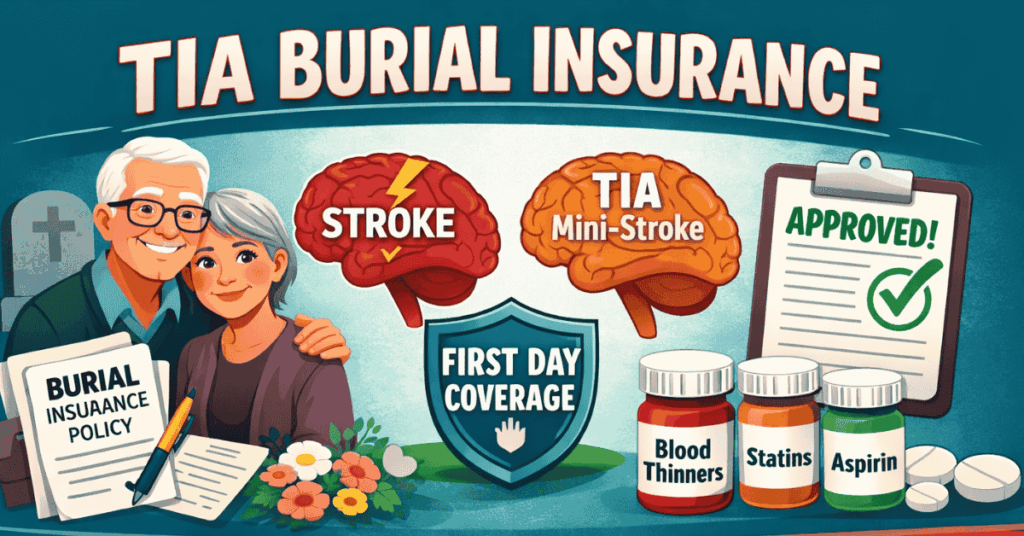
- Maintenance Meds are a Plus: Underwriters actually like seeing you on blood thinners (like Eliquis or Plavix) or statins. It proves you are proactively managing your health to prevent future events, making approval easier.
- TIAs are Treated Fairly: Because a mini-stroke (TIA) usually leaves no permanent damage, I can often find you better rates and faster “day-one” approvals than for a major stroke.
- Solutions for Every Outcome: If a stroke has caused lasting physical challenges that require help with daily activities, a Guaranteed Issue plan ensures your family is protected regardless of your medical history.
I have helped countless families navigate the confusing world of final expense insurance after a brain health scare. Many carriers now offer immediate-coverage options for people who manage their condition with the right medication. Most people will have no trouble qualifying for an affordable policy that starts protecting their family on day one.
Stroke And TIA Medical Definition & Health Risks
Insurers classify your risk level based on the time elapsed since your last medical event to determine the likelihood of a recurrence. Because a stroke occurs when blood flow to the brain is interrupted, and a Transient Ischemic Attack (TIA) serves as a temporary warning sign, underwriters view these events with caution, as a repeat episode can lead to permanent disability or death.
If you follow your doctor’s orders and keep your symptoms stable, I can find you a much better deal than someone who ignores their doctor’s treatment recommendations.
Life Insurance Companies Ask These Stroke Or TIA Health Questions
Different life insurance companies ask different questions to decide which applicants with stroke or TIA they may approve.
- Aetna Modified – Within the past year, have you been diagnosed with, received, or been advised to receive treatment for stroke or transient ischemic attack (TIA or mini-stroke), aneurysm, or brain tumor?
- Aetna Standard Level – Within the past 2 years, have you been diagnosed with, received, or been advised to receive treatment for stroke or transient ischemic attack (TIA or mini-stroke), aneurysm, or brain tumor?
- Aflac Modified – Within the past year, have you been diagnosed with, received, or been advised to receive treatment for stroke or transient ischemic attack (TIA or mini-stroke), aneurysm, or brain tumor?
- Aflac Standard Level – Within the past 2 years, have you been diagnosed with, received, or been advised to receive treatment for stroke or transient ischemic attack (TIA or mini-stroke), aneurysm, or brain tumor?
- CICA Life Level – In the past 10 years, have you opted to not seek treatment, have not taken medication, or have not followed the prescribed treatment plan following a medical diagnosis by a member of the medical profession for any one or more of the following: uncontrolled diabetes, uncontrolled high blood pressure, stroke or TIA, paralysis, congestive heart failure, heart disease, cardiomyopathy, lung disease including COPD (chronic obstructive pulmonary disease) or emphysema, liver cirrhosis or failure, kidney (renal) failure or insufficiency, or chronic kidney disease including dialysis?
- Family Benefit Life Decline – Within the past 12 months, have you been diagnosed by a medical professional for, or hospitalized for, a heart attack, stroke, transient ischemic attack (TIA), angina, aneurysm, or had cardiac or circulatory surgery of any kind to improve circulation to the heart or brain?
- Family Benefit Life Level – During the past 24 months, have you been diagnosed, treated, tested positive for, or given medical advice by a medical professional for a heart attack, stroke, transient ischemic attack (TIA), angina, aneurysm, or had cardiac or circulatory surgery of any kind such as a pacemaker, heart valve replacement, bypass, angioplasty, or stent implant to improve circulation to the heart or brain?
- Liberty Bankers Life Modified – Within the past 2 years have you, the Proposed Insured, been diagnosed, treated, tested positive for, or been given medical advice by a member of the medical profession for stroke (excluding Transient Ischemic Attack/TIA/mini-stroke) or paralysis?
- Liberty Bankers Life Preferred – Have you, the Proposed Insured, by a member of the medical profession, within the prior 2 years, been diagnosed with, or received, or been advised to receive treatment or medication for epileptic seizures or a Transient Ischemic Attack (TIA/ministroke)?
- Mutual of Omaha Level – Has the Proposed Insured ever been diagnosed by a licensed medical professional with, received treatment by a licensed medical professional for, or been advised to seek treatment by a licensed medical professional for; Diabetes at any age with complications or history of Retinopathy (eye), Nephropathy (kidney), Neuropathy (nerve), Peripheral Vascular Disease (PVD or PAD), Coronary Artery Disease (CAD) or Stroke?
- Mutual of Omaha Level – In the past 2 years, has the Proposed Insured been diagnosed by a licensed medical professional with, received treatment by a licensed medical professional for, or been advised to seek treatment by a licensed medical professional for Stroke or Transient Ischemic Attack (TIA)?
- Trinity Life Decline – Within the past 12 months, have you been diagnosed by a medical professional for, or hospitalized for, a heart attack, stroke, transient ischemic attack (TIA), angina, aneurysm, or had cardiac or circulatory surgery of any kind to improve circulation to the heart or brain?
- Trinity Life Level – During the past 24 months, have you been diagnosed, treated, tested positive for, or given medical advice by a medical professional for a heart attack, stroke, transient ischemic attack (TIA), angina, aneurysm, or had cardiac or circulatory surgery of any kind such as a pacemaker, heart valve replacement, bypass, angioplasty, or stent implant to improve circulation to the heart or brain?
Stroke & TIA Underwriting Basics
- Testing & Test Results: Underwriters look for pending MRI scans or carotid ultrasounds in your medical file. They will postpone your application if you have an unfinished test because they want to see the final results first.
Not all companies view medications negatively. Using the right medications actually reduces the insurance company’s mortality risk.
- Why it Matters: Taking blood thinners every day proves to the carrier that you are proactive about your health. I would much rather show an underwriter that you take your pills than tell them you are winging it.
Stroke & TIA Prescription Medication Classes:
- Anticoagulants: These include Coumadin, Eliquis, and Xarelto, which prevent dangerous blood clots.
- Antiplatelets: Doctors often prescribe Plavix or daily Aspirin to keep your blood flowing smoothly.
- Statins: Medications like Lipitor and Zocor lower your cholesterol to prevent plaque buildup in your arteries.
Stroke & TIA with Comorbidities
Insurers evaluate how multiple health problems occurring simultaneously increase your total risk, which often leads to higher premiums for senior applicants. If you have survived a stroke while also managing conditions like congestive heart failure or A-fib, your coverage path changes because underwriters must prioritize the cumulative impact of these serious cardiovascular risks. I recommend companies like Guarantee Trust Life for these situations because they handle multiple tough health issues better than the big-name brands.
You are smart to lock in a policy now before a second health problem makes your rates go through the roof. Just remember that controlled Stroke & TIA qualify people for immediate level burial insurance coverage, even with secondary health issues that are well-controlled.
Other Common Health Issues With Stroke & TIA
Stroke and TIA disrupt blood flow to the brain, causing tissue injury and neurological damage that can impair movement, speech, and cognition, and these resulting complications can affect underwriting decisions and policy selection when they’re present.
- Physical weakness or paralysis – Muscle control loss limits mobility, balance, and physical work capacity.
- Speech and language problems – Aphasia and slurred speech interfere with communication and job performance.
- Cognitive impairment – Memory loss, slowed thinking, and poor judgment affect daily decision-making.
- Vision problems – Partial vision loss or visual field defects increase accident and safety risk.
- Swallowing difficulties – Dysphagia raises the risk of choking and aspiration pneumonia.
- Emotional and behavioral changes – Depression, anxiety, irritability, and mood swings are common.
- Fatigue – Post-stroke exhaustion limits stamina even with mild physical effort.
- Increased fall risk – Balance and coordination problems lead to higher injury risk.
- Recurrent stroke risk – Prior stroke or TIA significantly increases the chance of another event.
- Loss of independence – Ongoing impairments may require assistance with daily activities and work adjustments.
Understanding Stroke And TIA Policy Types
Carriers offer different plan categories based on an applicant’s Stroke & TIA history and their current physical stability.
- Level: Level burial insurance offers first-day coverage and pays the full death benefit from day one. I can secure this for you through Trinity Life, Family Benefit Life, or Aflac if your last event was over 2 years ago.
- Graded: Graded burial insurance limits benefits during the 12 to 24 months for health or medical-related causes of death. This plan fits someone who had a stroke very recently or has survived multiple events.
- Guaranteed Issue: Guaranteed issue burial insurance requires no health questions but includes a 2-year waiting period before it pays out for causes of death related to health or medical conditions. This is your only option if you have paralysis or need help with eating, bathing, dressing, or other activities of daily living.
Sample Stroke And TIA Rate Snapshot for $10,000 Coverage
Insurers use age-based pricing to establish the cost of burial insurance premiums for every family. Your age and gender play a significant role in this calculation because women statistically live longer than men, typically allowing them to secure lower monthly rates.
Here are some preferred rates, but your final price depends on which A-rated carrier fits your specific health history.
TRINITY LIFE & FAMILY BENEFIT INSURANCE RATES AGE 50–85
| AGE | $10,000 | $15,000 | $20,000 | $25,000 |
|---|---|---|---|---|
| 50 | F: $21 M: $27 | F: $31 M: $39 | F: $40 M: $52 | F: $50 M: $64 |
| 55 | F: $26 M: $32 | F: $38 M: $47 | F: $49 M: $62 | F: $61 M: $78 |
| 60 | F: $32 M: $41 | F: $47 M: $61 | F: $62 M: $80 | F: $77 M: $100 |
| 65 | F: $41 M: $53 | F: $60 M: $79 | F: $79 M: $104 | F: $99 M: $130 |
| 70 | F: $52 M: $69 | F: $76 M: $102 | F: $101 M: $135 | F: $126 M: $169 |
| 75 | F: $71 M: $96 | F: $106 M: $143 | F: $140 M: $190 | F: $175 M: $237 |
| 80 | F: $104 M: $145 | F: $155 M: $217 | F: $207 M: $288 | F: $258 M: $360 |
| 85 | F: $155 M: $192 | F: $231 M: $287 | F: $307 M: $382 | F: $384 M: $477 |
Rates may vary based on age, gender, health, and state. Click the form on this page for the lowest rates from the best carriers.
Stroke & TIA Underwriting & Medication History
Insurers use your prescription history to verify how well your medical conditions are being managed and to assess your overall medical stability. While it may seem counterintuitive, being on blood thinners is often viewed positively by underwriters because it demonstrates that you are actively taking preventative measures to reduce the risk of serious events like strokes or blood clots. It proves that you are following your doctor’s orders to prevent another stroke.
I also know that companies like CICA Life care more about your current stability than the exact date of your mini-stroke.
Your prescription history is how insurance carriers verify medical stability, and recent hospitalizations for significant medical events may trigger a postponement rather than a permanent decline.
| Health Profile | Coverage Type | Wait Period |
|---|---|---|
| Stroke over 24 months ago | Level | None |
| Recent TIA (stable) | Level (CICA Life) | None |
| Paralysis/ADL Help | Guaranteed Issue | 2 Years |
Real Life Stroke And TIA Success Stories
Real-world examples illustrate how people with Stroke & TIA secure day-one protection.
Robert’s Story:
Robert suffered a TIA only 14 months ago and felt sure he was stuck with a waiting period. Most agents told him to come back in another year if he wanted a good price. I helped Robert apply with CICA Life because I knew they offered leniency for recent mini-strokes. He qualified for a $15,000 in first-day coverage immediately and saved 30% on his monthly premium. Now Robert can relax knowing his family has the cash they need for his final expenses.
Mary’s Story:
Mary had a major stroke 3 years ago and takes Plavix every single day. She thought her daily meds would make her insurance too expensive for her fixed income. I showed Mary that Family Benefit Life actually likes seeing patients who stick to their blood thinner routine. She qualified for their best level rates and got $10,000 in coverage for her kids. Mary felt a huge weight lift off her shoulders once she saw how affordable the right plan could be.
Stroke And TIA Financial Ratings & Stability
Insurers use financial ratings to verify a carrier’s ability to pay death claims when your family needs them most. Working only with companies that earn strong ratings from A.M. Best ensures the carrier has the financial strength to honor its promises, giving you peace of mind that a claim will not be denied due to insolvency. These scores prove that the carrier has the funds in the bank to pay your benefit. I also check the BBB to ensure the company provides top-tier service to families during their time of grief.
Insurance Carrier Ratings & Comparisons
| Carrier | A.M. Best | BBB | NAIC Complaints |
|---|---|---|---|
| Aflac | A+ (Superior) | A+ | Low |
| CICA | B++ (Good) | A+ | Low |
| Colonial Penn | A (Excellent) | A+ | High (300% Above Avg) |
| Family Benefit Life | A+ (Superior) | A+ | Low |
| Guarantee Trust Life | A (Excellent) | A+ | Low |
| Senior Life | Not Rated | A+ | High (300% Above Avg) |
| Trinity Life | A+ (Superior) | A+ | Low |
Frequently Asked Questions: Stroke & TIA Burial Insurance
Can you get burial insurance if you have had a TIA?
Some final expense insurance companies approve applicants with a history of TIA because they view mini-strokes as a more manageable medical risk. Many families mistakenly believe that a TIA makes them completely uninsurable for the rest of their lives. If you experienced a one-time event and maintain your cognitive health today, you can secure a great policy in minutes with the right carrier. Your family deserves that protection to make sure they never face a $15,000 funeral bill alone.
Is there a waiting period for burial insurance after a TIA?
The insurance company determines your waiting period by checking the calendar to see how much time has passed since your last medical event. If your TIA occurred more than 2 years ago, most state-regulated policies offer first-day coverage with no waiting period. With some companies, if your TIA was within the last 12 months, it usually triggers a mandatory two-year waiting period for natural death benefits. If you pass away from natural causes during those first 24 months, the company simply refunds your premiums plus 10% interest to your beneficiaries. Accidental death still pays the full benefit starting on day one. Always check with me in specialty cases like this.
How do burial insurance companies distinguish between a TIA and a major stroke?
Insurance underwriters perform a quick background check on your prescriptions to determine if you suffered permanent neurological damage or a minor event. A TIA acts like a warning shot that misses the target without leaving you in a wheelchair or requiring constant care. Since these events resolve quickly, underwriters treat you with more respect and offer lower rates than they give to major stroke victims. This distinction saves you or your family money on premiums and leaves more cash behind for your kids.
Will blood thinners for TIA affect my burial insurance eligibility?
Insurance companies view the use of blood thinners as proof that you manage your circulatory health and follow a doctor’s preventative plan. Prescribing medications like Plavix or Eliquis actually helps your case because it shows the company that you follow medical rules to prevent a bigger health crisis later. Underwriters view these pills as a safety net rather than a reason for a denial. Most carriers do not list these as knockout drugs, so you can still qualify for first-day coverage while taking a daily aspirin or a stronger blood thinner.
Can I get Day One burial insurance coverage if my TIA was recent?
First-day coverage remains difficult to secure for very recent events because insurance companies avoid taking high risks immediately after a health scare. With that said, CICA Life is often an option for 1st-day coverage. In the worst-case scenario, locking in a modified plan now ensures your spouse has some protection while you wait for that one-year milestone.
Does having diabetes and a TIA impact my burial insurance options?
Applicants with both diabetes and a TIA require careful carrier selection because insurance companies see two active risks burning at once. If you keep both conditions under control with medication, you can still find a standard policy with 1st-day coverage that fits your budget. But if your blood sugar remains high or uncontrolled, and you have diabetic complications, I’ll do some more shopping for you. Selecting the right carrier prevents a denial letter from wasting your time and leaving your family unprotected.
What questions will a burial insurance agent ask about my TIA?
Health questionnaires focus strictly on the dates of your medical events and the medications you take, rather than requiring a medical exam. You won’t need to see a doctor or pee in a cup for these policies. They just want to know when the TIA happened and which pills you filled at the pharmacy. This punch list of questions often allows the company to give you a yes in minutes. This process moves much faster than the corporate jargon and red tape you find with big-name insurers.
Are burial insurance premiums higher for TIA survivors?
Recent health scares cause a modest price increase through a convenience tax, but your rate locks in forever once you sign the application. You might pay a slightly higher premium if your TIA occurred recently. But once you pass the 2-year mark, many companies ignore the event entirely and offer you the lowest available rates. The best part of these policies is that your age-based pricing never goes up as you get older.
Can a TIA diagnosis lead to a total decline for burial insurance?
Total declines are extremely rare in the final expense industry because guaranteed issue plans provide a safety net for every applicant. A TIA never makes a person completely uninsurable in the eyes of an expert agent. If standard companies get too picky about your health history, a guaranteed issue plan accepts you without asking any health questions. These policies ensure you can still leave behind enough money to cover the funeral director and your memorial service.
What is the “look-back” period for a TIA in burial insurance?
Most burial insurance carriers only care about the last 12 to 24 months of your health history when determining your eligibility. Big term life policies want to know what you did 10 years ago, which is a total rip-off for seniors. Burial insurance differs because most carriers look back only 2 years to check for strokes or TIAs. If you have stayed healthy since your last event, you qualify for the best rates available. Shopping for the company with the shortest memory saves your family the most money.
Should I wait to apply for burial insurance until more time has passed since my TIA?
Waiting to apply for coverage is a major mistake because age-based pricing increases your monthly cost every single year. Many people want to wait until their TIA becomes old news to get a better rate. Honestly, it just does not make sense to wait, as your price goes up every year on your birthday. Also, you get older every day, and a TIA often acts as a warning for a larger stroke in the future. Grabbing a policy today grandfathers you into a rate before your health takes another hit.
