Thyroid Cancer Burial Insurance
Opening thyroid cancer doesn’t automatically disqualify you from burial insurance, but applying the wrong way can cost your family thousands. These thyroid cancer-approved policies help people pay out quickly to cover burial or cremation costs, or provide a tax-free legacy for your loved ones.
Key Thyroid Cancer Burial Insurance Insights
- You can get 1st-day coverage right away: One carrier offers first-day coverage to people who have been cured for any amount of time, provided their medical records show total stability.
- More 1st-day coverage options available: If you have been cured of thyroid cancer for more than 2 years, most insurance companies will offer you 1st-day coverage.
- Active treatment limits your current options to guaranteed-issue: If you are currently fighting thyroid cancer or undergoing radiation, a guaranteed-issue policy with a two-year waiting period is the only plan you will qualify for right now.
- The last treatment date matters more than the diagnosis date: Underwriters use the day you finished surgery or radioactive iodine to start their lookback clock, rather than the day a doctor first found the lump.
- Your prescription history reveals your current cancer status to insurers. Carriers track your pharmacy records for specific cancer drugs and hormone suppressors to verify whether your condition is active or resolved.
I am always on the lookout for more insurance companies that will offer affordable protection for thyroid cancer. Because of this, most people I help will have no trouble qualifying for and affording an instant approval policy.
Thyroid Cancer Burial Insurance Medical Definition & Health Risks
Underwriters determine your final expense insurance eligibility by calculating the exact number of months that have passed since your last active cancer treatment to confirm long-term stability. Thyroid cancer is a disease in which abnormal cells grow in the thyroid gland, the butterfly-shaped organ in your neck that controls your energy. Poor control of this cancer can lead to the disease spreading to your lymph nodes or lungs, creating a much higher risk of a premature death claim.
Life Insurance Companies Ask These Thyroid Cancer Questions
Different life insurance companies ask different questions to decide which thyroid cancer applicants they may approve.
- Aetna Decline – Within the past 2 years, have you been diagnosed with, received, or been advised to receive chemotherapy or radiation for any form of cancer, excluding basal cell or squamous cell skin cancer?
- Aetna Decline – Have you ever been diagnosed with more than one occurrence of the same or a different type of cancer?
- Aflac Decline – Within the past 2 years, have you been diagnosed with, received, or been advised to receive chemotherapy or radiation for any form of cancer, excluding basal cell or squamous cell skin cancer?
- Aflac Decline – Have you ever been diagnosed with more than one occurrence of the same or a different type of cancer?
- CICA Life Level – Have you been diagnosed by a member of the medical profession with more than one occurrence of any cancer, a recurrence of any cancer, metastasis of any cancer, or currently being treated for cancer (excluding basal cell or squamous cell skin cancer)?
- Family Benefit Life Decline – Within the past 24 months, have you been diagnosed or treated by a medical professional for, or taken medication for, internal cancer, leukemia, or melanoma?
- Guarantee Trust Life Graded – Within the last 24 months, have you been diagnosed by a member of the medical profession with Cancer (excluding Stage or Grade 1 Prostate Cancer, Carcinoma in Situ and Squamous Cell or Basal Cell Carcinoma) or received treatment by a member of the medical profession (excluding checkups while in remission, routine screening and maintenance medications) with radiation therapy, chemotherapy including oral medication or immunotherapy?
- Liberty Bankers Life Decline – Have you, the Proposed Insured, ever been diagnosed, treated, tested positive for, or been given medical advice by a member of the medical profession for congestive heart failure (CHF), cardiomyopathy, memory loss, Alzheimer’s, senile dementia, dementia, heart defibrillator implant, 2 or more instances of internal cancer(s), or terminal illness (“terminal illness” means a disease or illness that is expected to result in death within 24 months)?
- Mutual of Omaha Decline – Has the Proposed Insured ever been diagnosed by a licensed medical professional with, received treatment by a licensed medical professional for, or been advised to seek treatment by a licensed medical professional for Alzheimer’s Disease, Dementia, Huntington’s Disease, Sickle Cell Anemia, Myelodysplastic Syndrome (MDS), Lou Gehrig’s Disease (ALS), Hydrocephalus, Muscular Dystrophy, Quadriplegia, Paraplegia, Down Syndrome, Intellectual Developmental Disorder, Congestive Heart Failure, Cirrhosis, Metastatic Cancer or recurrent Cancer of the same type?
- Mutual of Omaha Decline – In the past 2 years, has the Proposed Insured been diagnosed with, been treated for or advised by a licensed medical professional to receive treatment for any form of cancer (except basal or squamous cell skin cancer)?
- Mutual of Omaha Level – In the past 4 years, has the Proposed Insured been diagnosed by a licensed medical professional with, received treatment by a licensed medical professional for, or been advised to seek treatment by a licensed medical professional for Cancer, Leukemia, or any other internal cancer or melanoma (except basal or squamous cell skin cancer)?
- Trinity Life Decline – Within the past 24 months, have you been diagnosed or treated by a medical professional for, or taken medication for, internal cancer, leukemia, or melanoma?
Thyroid Cancer Underwriting Basics
- Cancer Type: Carriers distinguish between slow-growing papillary cases and more aggressive types like anaplastic thyroid cancer.
- Treatment Dates: Underwriters review the dates of surgeries, radioactive iodine treatments, and external radiation to determine whether you are outside their recent-cancer window.
- Follow-up Stability: Insurance companies want to see clean neck ultrasounds and stable blood markers over the last 12 to 24 months.
The correct use of medications over time should reduce your mortality risk, allowing the insurance companies to offer you better coverage options.
Why it Matters: Your specific cancer stage and the type of cells found in your biopsy control the risk class and the monthly price you pay.
Thyroid Cancer Burial Insurance Prescription Medication Classes
- Hormone Replacement/Suppression: Drugs such as Synthroid (Levothyroxine), Tirosint, Cytomel (Liothyronine), and Armour Thyroid replace hormones or suppress hormone production to prevent cancer recurrence.
- Targeted Therapy: Medications such as Nexavar (Sorafenib), Lenvima (Lenvatinib), and Cometriq (Cabozantinib) are used to treat advanced cases that do not respond to iodine.
- Radioactive Agents: Doctors use Sodium Iodide (I-131) to destroy residual thyroid tissue after surgery.
Thyroid Cancer Burial Insurance With Comorbidities
Multiple health issues occurring simultaneously increase the total risk because the combination of several chronic diseases creates a much higher chance of medical complications. Thyroid cancer is often accompanied by other issues like high blood pressure, diabetes, or AFib, which underwriters must look at as a total package. While a thyroid condition might restrict you today, other issues like congestive heart failure or COPD might become the main factor that slows down your approval once the cancer is cured.
Getting coverage now is the smartest move because you protect your family while you are still eligible for a plan. A past thyroid cancer diagnosis doesn’t mean you can’t get quality burial insurance right now, even with secondary health issues.
Other Common Health Issues With Thyroid Cancer
Thyroid cancer survivors often face secondary health problems caused by the removal of the thyroid gland or the side effects of treatments like radioactive iodine. Insurance companies review these issues because they indicate how well your body is managing its hormones and whether your treatment has caused lasting damage to other organs.
- Hypoparathyroidism: This occurs if your parathyroid glands were accidentally damaged during neck surgery, leading to dangerously low calcium levels. Insurers care because chronic low calcium levels can cause arrhythmias, cataracts, and kidney stones.
- Secondary Malignancies: People who receive radioactive iodine (RAI) have a slightly higher risk of developing other cancers, like leukemia or breast cancer. Underwriters assess this risk by verifying that you are up to date with all recommended cancer screenings.
- Cardiovascular Issues: Improper doses of thyroid replacement medicine can cause heart palpitations, high blood pressure, or chest pain. Insurers want to see stable heart health because long-term hormonal imbalances can strain the heart muscle.
- Vocal Cord Paralysis: Nerve damage during surgery can result in a permanently hoarse voice or difficulty swallowing. This is a red flag for insurance companies because it can cause you to accidentally inhale food, leading to frequent lung infections.
- Osteoporosis: Long-term use of thyroid suppression medication can weaken your bones and make them more likely to break. Carriers view this as a mobility risk, especially for older applicants who might suffer a life-threatening hip fracture.
- Salivary Gland Damage: High doses of radioactive iodine can cause permanent dry mouth or swollen glands in your neck. While not life-threatening, it shows the insurer that you had a more aggressive form of cancer that required heavy treatment.
Keep in mind that a past thyroid cancer diagnosis doesn’t mean you can’t get quality burial insurance right now, even with secondary health issues.
Understanding Thyroid Cancer Burial Insurance Policy Types
Insurance carriers offer different plan categories based on an applicant’s thyroid cancer history and their long-term or short-term health stability.
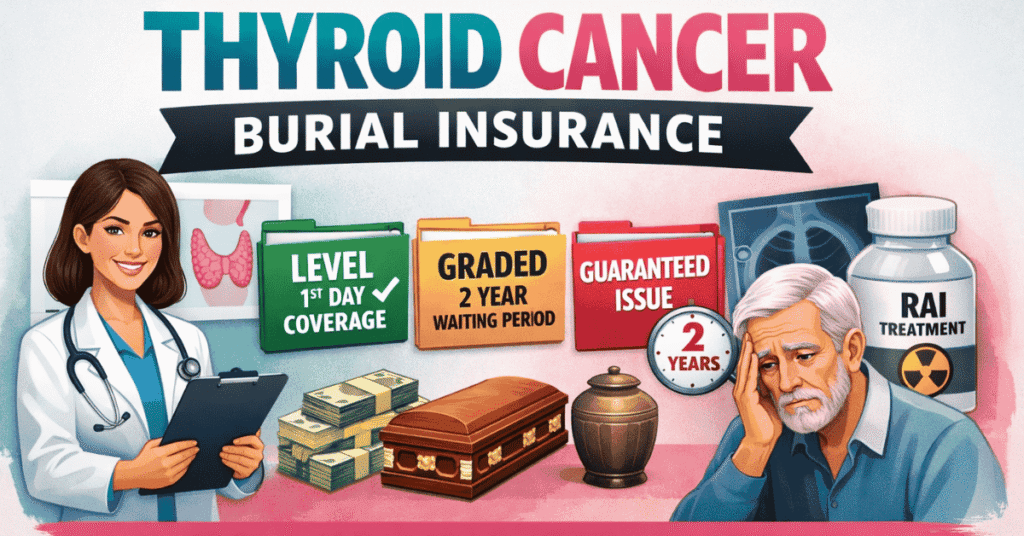
- Level: Level burial insurance offers 1st-day coverage and pays the full death benefit from day one. I recommend CICA Life, Aflac, Family Benefit Life, or Trinity Life if you have been cured for at least 2 years.
- Graded: Graded burial insurance limits benefits during the 12 to 24 months for health or medical-related causes of death. I recommend Guarantee Trust Life if you have cured cancer but also struggle with heart issues or COPD.
- Guaranteed Issue: Guaranteed issue burial insurance requires no health questions and includes a 2-year waiting period before benefits are paid for health- or medically related causes of death. I recommend Gerber Life if you currently have other significant life-threatening issues.
Sample Thyroid Cancer Rate Snapshot for $10,000 Coverage
The cost of your monthly insurance premium increases every single year because the insurance company takes on a greater financial risk as you get older. Rates vary by age and gender because women statistically live longer than men, allowing insurance carriers to offer them lower monthly premiums.
Here are some preferred rates if your cancer was more than 2 years ago. If it’s been less than 2 years, I have other A-rated companies that may be ideal for you.
TRINITY LIFE & FAMILY BENEFIT INSURANCE RATES AGE 50–85
| AGE | $10,000 | $15,000 | $20,000 | $25,000 |
|---|---|---|---|---|
| 50 | F: $21 M: $27 | F: $31 M: $39 | F: $40 M: $52 | F: $50 M: $64 |
| 55 | F: $26 M: $32 | F: $38 M: $47 | F: $49 M: $62 | F: $61 M: $78 |
| 60 | F: $32 M: $41 | F: $47 M: $61 | F: $62 M: $80 | F: $77 M: $100 |
| 65 | F: $41 M: $53 | F: $60 M: $79 | F: $79 M: $104 | F: $99 M: $130 |
| 70 | F: $52 M: $69 | F: $76 M: $102 | F: $101 M: $135 | F: $126 M: $169 |
| 75 | F: $71 M: $96 | F: $106 M: $143 | F: $140 M: $190 | F: $175 M: $237 |
| 80 | F: $104 M: $145 | F: $155 M: $217 | F: $207 M: $288 | F: $258 M: $360 |
| 85 | F: $155 M: $192 | F: $231 M: $287 | F: $307 M: $382 | F: $384 M: $477 |
Rates may vary based on age, gender, health, and state. Click the form on this page for the lowest rates from the best carriers.
Thyroid Cancer Burial Insurance Underwriting & Medication History
Insurance companies use your prescription drug records to verify your medical stability by tracking exactly when you last filled a thyroid cancer medication.
Consistent use of medication to manage your hormone levels demonstrates to the insurance company that you are a responsible applicant. One insider tip is to wait until you have a clean bill of health from any pending neck scans before applying for a first-day coverage plan. Underwriters view a history of regular endocrinology checkups as a sign that your cancer is being monitored correctly and remains in remission.
Your prescription history is how the insurance carriers verify medical stability by checking if you take simple hormone replacements or aggressive cancer fighters.
Recent hospitalizations for crises trigger postponement rather than permanent decline. If you are currently in a nursing home or need help with activities of daily living like bathing or dressing, you will be limited to a guaranteed-issue plan until you recover.
| Health Profile | Coverage Type | Wait Period |
|---|---|---|
| Cured 2+ Years | Level | None |
| Cured 12-24 Months | Standard / Graded | Varies |
| Active Treatment | Guaranteed Issue | 2-year period |
Real Life Thyroid Cancer Burial Insurance Success Stories
Real-world examples illustrate how people with thyroid cancer can get day-one protection with anywhere from $5,000 to $25,000 for burial, cremation, or final expenses.
Thomas’s Story
Thomas had COPD, and his thyroid was removed five years ago after doctors found and removed a small papillary tumor. He has taken his daily hormone pill ever since, and all of his neck scans have come back clear. Because he was well beyond the two-year cure mark, I helped him qualify for a first-day coverage plan with Aflac. This $15,000 policy protected his family immediately and cost him much less than the waiting-period plans he saw advertised on late-night TV. He was relieved that his past cancer history didn’t stop him from getting a great deal.
Maria’s Story
Maria finished her radioactive iodine treatment only eight months ago and is still in the early stages of her recovery. Since she was still within the mandatory two-year window for most carriers, she didn’t qualify for immediate coverage. I placed her with Gerber Life on a guaranteed-issue plan to provide protection as she approaches her two-year milestone. This plan ensures her family receives her premiums back, plus 10% interest if she dies during the waiting period, providing a financial safety net.
Thyroid Cancer Financial Ratings & Stability
Financial ratings verify that an insurance carrier possesses enough money to pay out death claims to your family by measuring its total cash reserves. A.M. Best ratings prove that an insurance company is a financial powerhouse that can keep its promises for decades. The Better Business Bureau helps us see which companies treat their customers with respect and process claims quickly. We also check the NAIC to ensure the company complies with all state regulations for your protection.
Insurance Carrier Ratings & Comparisons
| Carrier | A.M. Best | BBB | NAIC Complaints |
|---|---|---|---|
| Aflac | A+ (Superior) | A+ | Low |
| CICA | B++ (Good) | A+ | Low |
| Colonial Penn | A (Excellent) | A+ | High (300% Above Avg) |
| Family Benefit Life | A+ (Superior) | A+ | Low |
| Guarantee Trust Life | A (Excellent) | A+ | Low |
| Senior Life | Not Rated | A+ | High (300% Above Avg) |
| Trinity Life | A+ (Superior) | A+ | Low |
Frequently Asked Questions: Thyroid Cancer Burial Insurance
Can I get burial insurance if I have thyroid cancer?
Insurance companies provide burial insurance to individuals with thyroid cancer through a variety of plan tiers based on the severity of the diagnosis. Most applicants with non-aggressive forms like papillary thyroid cancer can qualify for immediate protection once they have finished active treatment and have had clear follow-up scans. If you are currently in treatment or at a more advanced stage, you can still secure a guaranteed-acceptance policy that bypasses all health questions but includes a mandatory two-year waiting period.
How does the type of thyroid cancer affect my burial insurance rates?
Underwriters categorize thyroid cancer by cellular type to determine risk level and the resulting monthly premium. Papillary and follicular thyroid cancers are viewed as the lowest risk and often qualify for standard or preferred rates once you are two to three years post-treatment. In contrast, medullary and anaplastic thyroid cancers are considered high-risk conditions that typically restrict applicants to “Graded” or “Guaranteed Issue” plans with higher premiums and temporary waiting periods.
Can thyroid cancer survivors qualify for first-day coverage?
Thyroid cancer survivors can qualify for immediate first-day coverage if they have been in remission for at least two years and have a history of successful surgical removal. Unlike more aggressive internal cancers, many final expense carriers view early-stage thyroid cancer as highly treatable and may offer their best “Level” benefits relatively quickly. If your cancer was localized and did not require chemotherapy or external radiation, you are a strong candidate for a policy that pays out 100% of the benefit from the first day.
Does a total thyroidectomy impact burial insurance eligibility?
A total thyroidectomy is viewed by insurance companies as a positive step toward long-term stability rather than a disqualifying event. Underwriters prefer to see that the primary source of the cancer has been surgically removed and that you are successfully managing your health with a physician-prescribed hormone regimen like Levothyroxine. As long as your pathology report shows clear margins and no metastasis, the presence of a thyroidectomy scar often helps you secure immediate coverage.
Does burial insurance cover death if thyroid cancer returns?
Burial insurance policies pay the full death benefit if a survivor passes away from a recurrence of thyroid cancer, provided the policy has passed the initial two-year contestability period. Once a permanent whole life policy is in force and the waiting period has expired, the insurance company is legally bound to pay the claim for any natural cause of death. This protection is vital for thyroid cancer survivors because the disease can occasionally recur decades after the initial diagnosis.
What type of death is not covered by thyroid cancer burial insurance?
Insurance policies for thyroid cancer patients include standard industry exclusions such as the two-year suicide clause and deaths occurring during the commission of a felony. Additionally, if an applicant intentionally hides an active diagnosis or a recent hospitalization for an aggressive cancer on their application, the company may deny the claim during the first two years for misrepresentation. Beyond these legal and fraudulent scenarios, the policy covers all medical complications and accidental deaths.
How long must I be cancer-free to get the lowest burial insurance rates?
The lowest “Preferred” rates are typically available to thyroid cancer survivors who have been in remission for five to ten years. For very early-stage papillary cases that were treated only with surgery, some specialized carriers may offer competitive rates in as little as three years. The “look-back” period varies significantly by company, making it important to shop around to find the carrier that views your specific remission length most favorably.
Can I get burial insurance if I am taking radioactive iodine?
Taking radioactive iodine (RAI) is considered an active form of cancer treatment that will typically restrict you to a “Guaranteed Issue” policy during the treatment phase. Because insurance companies want to see that the RAI was successful in eliminating any remaining thyroid tissue or cancer cells, they usually require a stability period of 12 to 24 months after the treatment concludes. Once you have a clear follow-up scan post-RAI, you can begin applying for plans that offer immediate first-day coverage.
Why should I use an independent broker for thyroid cancer insurance?
An independent broker can compare dozens of insurance companies to find the one that has the most lenient rules for your specific thyroid cancer history. Since one carrier may decline you for a history of medullary cancer while another may offer you a “Graded” plan, a broker ensures you find the best possible deal. This specialized expertise helps you avoid the high cost of a guaranteed-issue policy by qualifying you for immediate, lower-cost protection with a stable health history.
