Coronary Artery Disease Burial Insurance
Coronary Artery Disease doesn’t automatically disqualify you from burial insurance, but applying the wrong way can cost your family thousands. These coronary artery disease-approved policies I help people with pay out quickly to cover burial or cremation costs, or provide a tax-free legacy for your loved ones.
Coronary Artery Disease Key Insights
- Health stability leads to lower premiums: Carriers offer first-day coverage when an applicant demonstrates that their heart condition has remained stable over the last 12 to 24 months.
- Lookback windows dictate plan options: Underwriters examine the last 12 to 24 months of your medical history to see if you have had any major heart attacks, stents, or bypass surgeries.
- Medication records verify health status: Insurance companies review your pharmacy history to see if you take maintenance drugs like statins or higher-risk medications like short or long-acting nitrates.
- Pending cardiac tests delay approvals: It’s smart to postpone your application if you have a stress test or heart procedure scheduled but not yet completed by a doctor.
- ADL limitations trigger waiting periods: Needing help with daily tasks like bathing or dressing usually disqualifies you from immediate coverage and requires a guaranteed issue plan.
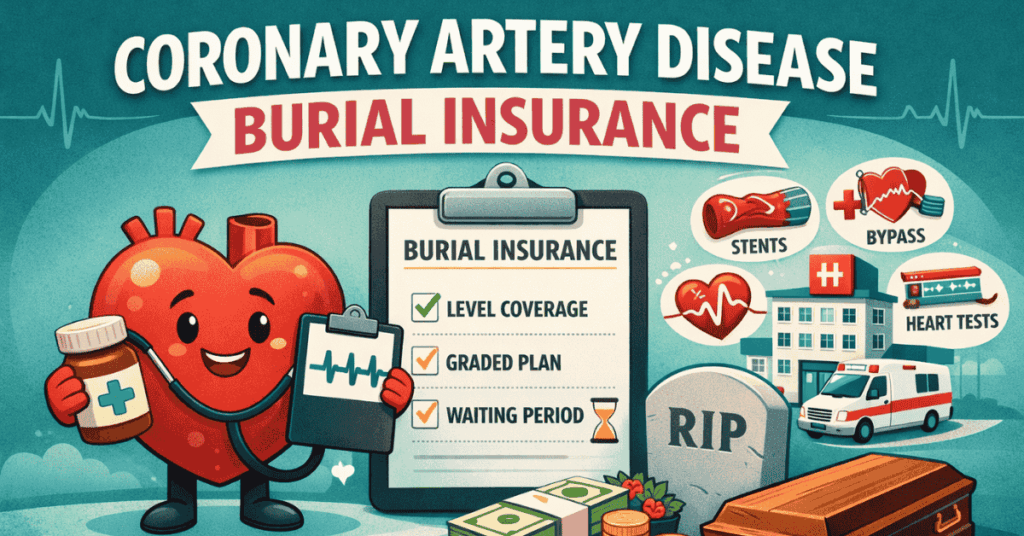
Coronary Artery Disease Medical Definition & Health Risks
Insurance underwriters classify the risk level of Coronary Artery Disease by reviewing the time elapsed since your last cardiac event or surgical intervention. Because CAD involves plaque buildup that limits blood flow to the heart, insurers use the date of your most recent procedure to determine if your condition has stabilized enough to qualify for standard rates. This lack of oxygen can damage the heart muscle over time. Insurers view poor control of CAD as a major risk because it is a leading cause of heart attacks and sudden cardiac death.
Coronary Artery Disease Underwriting Basics
- Testing & Test Results: Underwriters look for a stable Ejection Fraction (EF) score between 55% and 65%. They care if a stress test shows your heart can handle physical activity without pain or EKG changes.
The correct use of medications over time should reduce your mortality risk, allowing the insurance companies to offer you better coverage options.
- Why it Matters: Test results tell the insurer if your disease is mild or advanced. This determines if you pay the lowest price or a higher rate with a waiting period.
Coronary Artery Disease Prescription Medication Classes
- Antiplatelets: Aspirin, Plavix, or Effient to prevent blood clots from forming in narrowed arteries.
- Beta-Blockers: Drugs like Metoprolol slow the heart rate and reduce the workload on your heart.
- Statins: Cholesterol-lowering drugs like Lipitor to stop more plaque from building up.
- Nitrates: Nitroglycerin for sudden chest pain or Isosorbide for long-term protection.
Coronary Artery Disease with Comorbidities
When multiple health conditions occur simultaneously, the combined effect increases the total insurance risk beyond what a single diagnosis would represent. Because heart disease is frequently accompanied by diabetes, high blood pressure, or obesity, underwriters evaluate these “comorbidities” together to determine if the overall health profile is stable or deteriorating. These conditions work together to damage your blood vessels even faster. Insurers are more cautious when you have both heart disease and kidney issues because these organs depend on each other to stay healthy.
In my experience, controlled Coronary Artery Disease qualifies people for immediate level burial insurance coverage even with secondary health issues.
Other Common Health Issues With Coronary Artery Disease
Coronary artery disease narrows or blocks the arteries that supply the heart, reducing blood flow and oxygen delivery to the heart muscle, limiting physical capacity and potentially affecting underwriting decisions and policy selection when related complications are present.
- Chest pain or angina – Reduced blood flow causes pressure or pain with exertion that limits activity and work tolerance.
- Shortness of breath – The heart can’t pump efficiently, so exertion triggers breathlessness and early fatigue.
- Heart attack risk – Plaque rupture or clot formation can abruptly block blood flow and cause permanent heart damage.
- Heart failure – Ongoing strain weakens the heart muscle, leading to swelling, fatigue, and reduced endurance.
- Abnormal heart rhythms – Damaged heart tissue increases the risk of arrhythmias, dizziness, or fainting.
- Exercise intolerance – Limited oxygen delivery prevents sustained physical activity.
- Chronic fatigue – Poor cardiac output reduces energy even during routine daily tasks.
- Reduced work capacity – Physical and cognitive strain limit consistent job performance.
- Need for procedures or surgery – Stents, bypass surgery, or repeat interventions may be required over time.
- Increased mortality risk – Progressive arterial disease raises long-term risk of major cardiac events.
Understanding Coronary Artery Disease Policy Types
Carriers offer different plan categories based on an applicant’s Coronary Artery Disease and long-term health stability.
- Level: Level burial insurance offers 1st-day coverage and pays the full death benefit from day one through companies like Family Benefit Life, Trinity Life, and Aflac.
- Graded: Graded burial insurance limits benefits during the 12 to 24 months for health-related causes of death through Guaranteed Trust Life.
- Guaranteed Issue: Guaranteed issue burial insurance requires no health questions but includes a 2-year waiting period before it pays out for health-related causes of death through Gerber Life.
Sample Coronary Artery Disease Rate Snapshot for $10,000 Coverage
Monthly burial insurance costs increase as you get older because your statistical life expectancy decreases, making you a higher risk for the insurer. Rates also vary by gender because women statistically live longer than men, allowing insurance companies to offer them lower monthly premiums.
Here are some preferred rates, but your rates can vary based on which A-rated carrier is best for your situation.
TRINITY LIFE & FAMILY BENEFIT INSURANCE RATES AGE 50–85
| AGE | $10,000 | $15,000 | $20,000 | $25,000 |
|---|---|---|---|---|
| 50 | F: $21 M: $27 | F: $31 M: $39 | F: $40 M: $52 | F: $50 M: $64 |
| 55 | F: $26 M: $32 | F: $38 M: $47 | F: $49 M: $62 | F: $61 M: $78 |
| 60 | F: $32 M: $41 | F: $47 M: $61 | F: $62 M: $80 | F: $77 M: $100 |
| 65 | F: $41 M: $53 | F: $60 M: $79 | F: $79 M: $104 | F: $99 M: $130 |
| 70 | F: $52 M: $69 | F: $76 M: $102 | F: $101 M: $135 | F: $126 M: $169 |
| 75 | F: $71 M: $96 | F: $106 M: $143 | F: $140 M: $190 | F: $175 M: $237 |
| 80 | F: $104 M: $145 | F: $155 M: $217 | F: $207 M: $288 | F: $258 M: $360 |
| 85 | F: $155 M: $192 | F: $231 M: $287 | F: $307 M: $382 | F: $384 M: $477 |
Rates may vary based on age, gender, health, and state. Click the form on this page for the lowest rates from the best carriers.
Coronary Artery Disease Underwriting & Medication History
The insurance carrier assesses medical stability by reviewing your prescription history to determine whether your heart disease is well-managed. Consistently using maintenance medication is a positive indicator to underwriters, as it demonstrates that your condition is stable and you are following a prescribed treatment plan. The insurance companies will check the consistency of your doses to ensure you are following your doctor’s orders. If your medications have not changed in the past 2 years, most companies will view you as a stable, lower-risk applicant.
Your prescription history is how the insurance carriers verify medical stability. Recent hospitalizations for crises trigger postponement rather than permanent decline.
| Health Profile | Coverage Type | Wait Period |
|---|---|---|
| Stable (2+ Years) | Level | None |
| Recent Procedure | Graded | 12-24 Months |
| Hospitalized Recently | Guaranteed Issue | 2 Years |
Real Life Coronary Artery Disease Success Stories
Real-world examples illustrate how people with Coronary Artery Disease can get day-one protection with anywhere from $5,000 to $25,000 for burial, cremation, funeral expenses, final expenses, leave money for loved ones, pay off last bills, or a combination of these.
Robert’s Story
Robert had a heart stent put in nearly 3 years ago and has remained healthy ever since. He was worried that his surgery history would force him into a waiting-period plan. I helped him apply with Family Benefit Life because they are very friendly to patients with stable heart conditions. He qualified for a $15,000 first-day coverage plan with instant approval. This policy saved him money compared to the high-priced plans he saw on TV. Now his family has the money they need to pay off his final bills without any waiting period.
Linda’s Story
Linda had a minor heart event six months ago that required a short stay in the hospital. She was worried that her recent treatment would make her ineligible for any insurance at all. I navigated her medical history and found a graded plan with Guaranteed Trust Life. Even though she has a 2-year waiting period for natural causes, her accidental death coverage started immediately. This plan provides her with $10,000 for her funeral expenses. She felt relieved knowing she started her coverage before any other health issues could occur.
Coronary Artery Disease Financial Ratings & Stability
Financial ratings verify a carrier’s ability to pay death claims by measuring its long-term money management and investment stability. A.M. Best ratings provide an independent evaluation of these reserves, confirming that an insurance company has the financial strength to fulfill its obligations to your family regardless of future economic shifts. A high BBB rating indicates that the company provides excellent service to its policyholders. Checking these scores ensures you are picking a stable partner for your final expenses.
Insurance Carrier Ratings & Comparisons
| Carrier | A.M. Best | BBB | NAIC Complaints |
|---|---|---|---|
| Aflac | A+ (Superior) | A+ | Low |
| CICA | B++ (Good) | A+ | Low |
| Colonial Penn | A (Excellent) | A+ | High (300% Above Avg) |
| Family Benefit Life | A+ (Superior) | A+ | Low |
| Guarantee Trust Life | A (Excellent) | A+ | Low |
| Senior Life | Not Rated | A+ | High (300% Above Avg) |
| Trinity Life | A+ (Superior) | A+ | Low |
Frequently Asked Questions: Coronary Artery Disease Burial Insurance
Can individuals with coronary artery disease qualify for burial insurance?
Specialized final expense insurance companies approve seniors with coronary artery disease every single day because underwriters often view managed heart conditions as a standard risk. I have sat with thousands of people who think a clogged artery makes them uninsurable, but honestly, it just does not make sense to go without protection when the market is this inclusive. If your doctor monitors your condition and you follow a treatment plan, you can secure permanent coverage without ever undergoing a medical exam. You do not have to settle for an overpriced plan just because you have a heart history. These companies design their products for people in your exact shoes.
Do heart medications affect burial insurance eligibility?
Insurance companies perform a quick background check on your prescriptions to verify that your medical history remains stable and under control. The underwriters review your use of statins, beta-blockers, and blood thinners to confirm that you are managing your coronary artery disease correctly. Consistent medication use actually helps your case because it signals to the carrier that you are a low-risk candidate. And here is the part they do not tell you in the commercial: taking your pills regularly often leads to better plan options and lower rates. This keeps more money in your pocket instead of charging you a convenience tax for being unorganized.
Is first-day coverage available for people with coronary artery disease?
Final expense carriers provide immediate first-day coverage to stable applicants who have not experienced a major heart event in the last 2 years. If you have avoided heart attacks, stent placements, or bypass surgeries for at least 24 months, you can usually bypass those annoying waiting periods. This ensures your family receives the full payout for your funeral regardless of when the policy starts. But if you listen to those late-night TV ads, they might try to put you in a plan with a two-year waiting period just because it is easier for them. Honestly, it just does not make sense to wait for protection when you can get full value from the very first payment.
How do burial insurance waiting periods apply to recent heart procedures?
Insurance companies typically trigger a graded benefit period if a doctor performed a heart surgery or stent placement on you within the last 12 to 24 months. Some companies limit natural death payouts during the initial phase of the policy if your diagnosis is brand new. But accidental death protection begins the moment you pay your first premium, so your family is never completely on their own. You should lock in a plan now so you can start the two-year waiting period. Every day you wait is another day your family is left holding the bag for a $15,000 funeral bill.
Does coronary artery disease count as a pre-existing condition in burial insurance?
Final expense carriers treat heart disease as a pre-existing condition, but they still assume the risk of your heart history through simplified underwriting. The insurance company uses your medical history to determine your rate class rather than automatically denying you. You do not have to worry about a “Big Name” company turning you down, because these specialized plans are designed for people with health issues. But you must be honest about your history, so the company pays the check when the time comes. This ensures your kids do not get stuck with a legal mess during an already difficult time.
Are burial insurance premiums for people with CAD fixed for life?
A permanent whole life policy locks in your monthly premium for the rest of your life, so your budget never takes a hit. Once the insurance company approves your application, your rate remains the same regardless of changes in your health or age. This stability allows seniors in fixed-income households to plan their final expenses with complete financial certainty. And unlike those “introductory” rates you see on TV, these prices will never jump up when you hit age 70 or 80. You protect your family from inflation and your own aging process by securing a fixed rate today.
Can pending heart tests delay burial insurance approval?
Insurance underwriters will postpone your policy activation if you have outstanding medical tests, such as a stress test or a scheduled surgery. The company requires completed EKG results or follow-up appointment details before it can finalize your risk assessment. Honestly, it just does not make sense to apply while you are in the middle of a diagnostic mystery because the company will just tell you to come back later. It is best to apply after your doctor provides a stable follow-up report to ensure a smooth approval process. This prevents unnecessary red tape and gets your family protected without the headache of a “pending” status.
Is burial insurance better than term for heart patients?
Whole life burial insurance policies provide a permanent guarantee that your coverage will stay active until the day you pass away. Term insurance is a rip-off for heart patients because it eventually expires and can leave you totally uninsured in your later years. If your health declines while you have a term policy, you may find it impossible to qualify for a new one once the old one ends. But a burial policy ensures that the funds for your final arrangements are always available for your spouse and kids. You should own your insurance rather than rent it from a company that can kick you out as you get older.
What happens if I have a heart attack after buying burial insurance?
Your active policy maintains its full benefit status even if you suffer a new heart crisis after the coverage begins. Once your coverage is in force, the insurance company cannot cancel the plan or raise your rates due to a new health disaster. This protects your family even if your coronary artery condition worsens over time or leads to surgery. You get the peace of mind knowing that the check is guaranteed as long as you keep your premiums current. This is why you must get your protection in place while you are stable, before the next health scare makes things more expensive.
