Cancer Burial Insurance
Cancer doesn’t automatically disqualify you from burial insurance, but applying the wrong way can cost your family thousands. These cancer-approved policies I help people with pay out quickly to cover burial or cremation costs, or provide a tax-free legacy for your loved ones.
Key Cancer Burial Insurance Insights
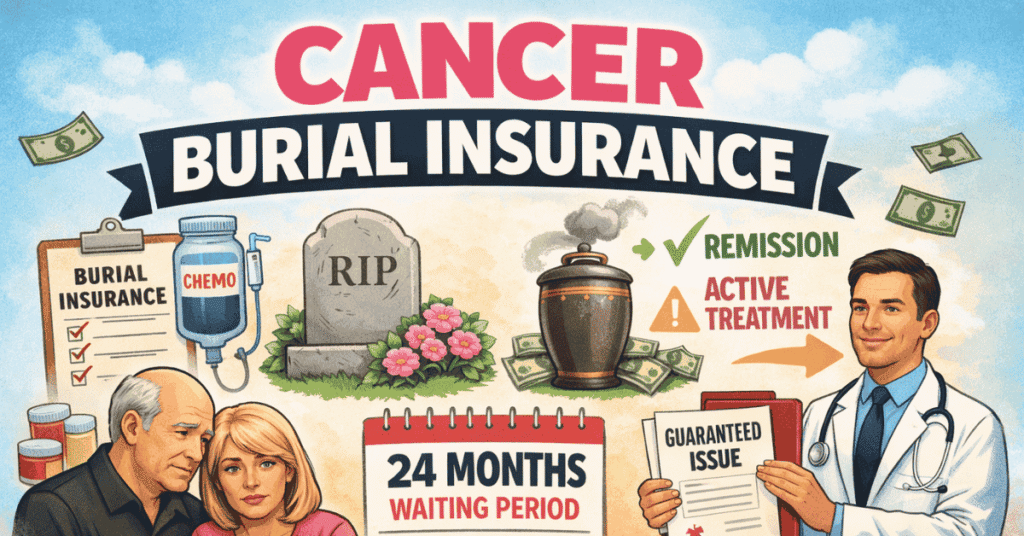
- Active treatment limits your initial options: If you are currently receiving chemotherapy, radiation, or taking maintenance drugs, insurance companies will require a two-year waiting period.
- Remission timing determines your plan type: Most carriers use a 24-month lookback period to decide if you qualify for immediate full coverage or a limited-benefit plan.
- Maintenance medications count as active treatment: Taking a daily pill to prevent cancer growth is treated as being in active treatment, even if you feel healthy and stable.
- Internal spread changes your eligibility: If cancer has moved from its original site to other organs, underwriters view the risk as much higher and typically offer guaranteed-issue plans.
- Simple skin cancers are often ignored: Basal cell and squamous cell cancers that were frozen or burned off usually do not count as “cancer” on insurance applications.
I am always on the lookout for more insurance companies that will offer affordable protection for cancer. Because of this, most people I help will have no trouble qualifying for and affording an instant approval policy.
Cancer Burial Insurance Medical Definition & Health Risks
Underwriters classify the risk level of cancer based on the date of your last treatment and the specific type of cancer diagnosed.
Cancer is a disease where abnormal cells grow uncontrollably and can spread to other parts of the body. Poor control of this condition is dangerous because it leads to organ failure and a very high mortality risk, which significantly increases the risk of a life insurance claim.
Cancer Underwriting Basics
- Last Treatment Date: Carriers care most about when you finished your last round of chemo or radiation, not just the diagnosis date.
- Stage and Grade: They look at how advanced the cancer was and if it was metastatic (spread to other areas).
- Biopsy Results: Underwriters review pathology reports to determine whether the tumor is aggressive or slow-growing.
- Recurrence: If you have had cancer more than once, many carriers will automatically move you to a waiting-period plan.
The correct use of medications over time should reduce your mortality risk, allowing the insurance companies to offer you better coverage options.
Why it Matters: Your last treatment date and the stage of your cancer tell the insurance company if you are a “current risk” or a “stable survivor.”
Cancer Burial Insurance Prescription Medication Classes
- Chemotherapy: These drugs kill fast-growing cancer cells throughout the body. Common examples include Cyclophosphamide, Methotrexate, Fluorouracil, Doxorubicin, and Paclitaxel.
- Hormone Therapy: These medications block growth signals for breast or prostate cancers. Common examples include Tamoxifen, Anastrozole, Letrozole, Bicalutamide, and Leuprolide.
- Immunotherapy: These treatments help your immune system find and destroy cancer cells. Common examples include Keytruda, Opdivo, Tecentriq, and Yervoy.
- Targeted Therapy: These drugs target specific proteins or genes that drive cancer growth. Common examples include Gleevec, Herceptin, Rituxan, Ibrance, and Avastin.
Cancer Burial Insurance With Comorbidities
Combining multiple medical issues within a single health profile significantly raises total insurance risk because secondary diseases often worsen the primary cancer.
If you have cancer along with heart disease or lung issues, the insurance company sees a much higher chance of a claim. Many cancer treatments can weaken the heart or kidneys, so having these issues together makes a level-benefit plan very difficult to get. If your health includes several major conditions, a guaranteed-issue policy is often the most realistic way to get protected right away.
A past cancer diagnosis doesn’t mean you can’t get quality burial insurance right now, even with secondary health issues.
Common Cancer Types For Burial Insurance
Insurers track the most frequent cancer types because each one carries unique long-term risks for your heart, lungs, and overall survival.
- Blood Cancers: This group includes Leukemia (Acute and Chronic), Lymphoma (Hodgkin and Non-Hodgkin), and Multiple Myeloma, which usually require a two-year waiting period.
- Digestive System Cancers: These include cancers of the Esophagus, Stomach, Pancreas, Liver, Bile Duct, and Gallbladder, which are often viewed as high-risk due to low survival rates.
- Reproductive Cancers: For women, this includes Ovarian, Uterine (Endometrial), and Cervical cancer; for men, this includes Testicular and Penile cancer.
- Head and Neck Cancers: Carriers are at increased risk of cancers of the Mouth, Tongue, Throat (Pharynx), Larynx, and Salivary Glands, often linked to tobacco use.
- Urinary System Cancers: Bladder and Kidney (Renal Cell) cancers are common, and underwriters check for stable kidney function after treatment.
- Endocrine Cancers: Thyroid cancer is the most common here and often qualifies for better rates, while Adrenal and Pituitary tumors are more complex.
- Brain and Nerve Cancers: Glioblastoma and other Brain or Spinal Cord tumors are serious red flags that usually push an applicant toward a guaranteed-issue plan.
- Soft Tissue and Bone Cancers: Known as Sarcomas (e.g., osteosarcoma), these are rare but aggressive cancers of muscle, fat, or bone.
A past cancer diagnosis doesn’t mean you can’t get quality burial insurance right now, even with secondary health issues.
Understanding Cancer Burial Insurance Policy Types
Carriers offer different plan categories based on an applicant’s cancer history and the amount of time since their last treatment.
- Level: Level burial insurance offers 1st-day coverage and pays the full death benefit from day one. I recommend Trinity Life, Family Benefit Life, or Aetna if you have been cancer-free and treatment-free for over 2 years.
- Graded: Graded burial insurance limits benefits during the 12 to 24 months for health or medical-related causes of death. This is often an option if your treatment ended between 12 and 24 months ago. Guarantee Trust Life is a great selection in this catagory.
- Guaranteed Issue: Guaranteed issue burial insurance requires no health questions and includes a 2-year waiting period before benefits are paid for health- or medically related causes of death. I recommend Gerber Life if you are currently in treatment.
Sample Cancer Rate Snapshot for $10,000 Coverage
Age-based pricing directly affects burial insurance premiums, as carriers increase monthly rates as the risk of death increases. Rates vary by age and gender because women statistically live longer than men, allowing insurance companies to offer them lower monthly premiums.
Here are some preferred rates from one of my top-recommended companies, but your rates may vary depending on which A-rated carrier is best for your situation.
TRINITY LIFE & FAMILY BENEFIT INSURANCE RATES AGE 50–85
| AGE | $10,000 | $15,000 | $20,000 | $25,000 |
|---|---|---|---|---|
| 50 | F: $21 M: $27 | F: $31 M: $39 | F: $40 M: $52 | F: $50 M: $64 |
| 55 | F: $26 M: $32 | F: $38 M: $47 | F: $49 M: $62 | F: $61 M: $78 |
| 60 | F: $32 M: $41 | F: $47 M: $61 | F: $62 M: $80 | F: $77 M: $100 |
| 65 | F: $41 M: $53 | F: $60 M: $79 | F: $79 M: $104 | F: $99 M: $130 |
| 70 | F: $52 M: $69 | F: $76 M: $102 | F: $101 M: $135 | F: $126 M: $169 |
| 75 | F: $71 M: $96 | F: $106 M: $143 | F: $140 M: $190 | F: $175 M: $237 |
| 80 | F: $104 M: $145 | F: $155 M: $217 | F: $207 M: $288 | F: $258 M: $360 |
| 85 | F: $155 M: $192 | F: $231 M: $287 | F: $307 M: $382 | F: $384 M: $477 |
Rates may vary based on age, gender, health, and state. Click the form on this page for the lowest rates from the best carriers.
Cancer Burial Insurance Underwriting & Medication History
Prescription history identifies the role of medical stability by showing if you currently take maintenance drugs to keep your cancer from returning. One underwriting tip is to wait until you are a full 24 months past your last treatment before applying for level coverage to avoid a surprise decline. You should also be aware that some carriers treat “cancer-free” as meaning no more monitoring or testing is needed at all. Another tip is to double-check your pharmacy records because a refill for an old chemo drug can trigger a 2-year wait even if you are in remission.
Your prescription history is how the insurance carriers verify medical stability. Recent hospitalizations for crises trigger postponement rather than permanent decline. If you were in the hospital for surgery or a complication in the last 90 days, you typically need to wait until you are fully discharged from your doctor’s care before applying.
| Health Profile | Coverage Type | Wait Period |
|---|---|---|
| 2+ Years Remission | Level | None |
| 12-24 Months Since Treatment | Graded | 2 Years |
| Current Treatment | Guaranteed Issue | 2 Years |
Real Life Cancer Burial Insurance Success Stories
Real-world examples illustrate how people with cancer can get protection with anywhere from $5,000 to $25,000 for burial, cremation, or other final expenses.
Thomas’ Story
Thomas finished his last round of chemo for colon cancer 3 years ago and has had clean scans ever since. He was concerned that his history would require an expensive plan with a long wait. Since he was more than 2 years treatment-free, I helped him find a level-benefit plan with Trinity Life. This plan provided him with $15,000 in first-day coverage and saved him nearly 30% compared to other quotes he received. He can now rest easy knowing his funeral costs are fully covered.
Martha’s Story
Martha was recently diagnosed with breast cancer and is currently going through radiation treatments. She wanted a $10,000 policy to make sure her kids wouldn’t have to pay for her cremation. Because she is in active treatment, we couldn’t get her day-one coverage, but we placed her with Gerber Life. Her guaranteed-issue plan will refund all her premiums plus 10% interest if she dies within the first 2 years, and the full $10,000 thereafter. This plan provided her family with the protection they needed during a difficult time.
Cancer Financial Ratings & Stability
Financial ratings assess a carrier’s ability to pay death claims by evaluating the company’s long-term financial health and cash reserves.
A.M. Best gives out letter grades like A or A+ to show that a company is strong enough to pay your family’s claim even if the economy is bad. The Better Business Bureau helps you see if a company treats its customers with respect and solves problems quickly. We also check the NAIC complaint index to make sure people are not having trouble getting their claims paid on time.
Insurance Carrier Ratings & Comparisons
| Carrier | A.M. Best | BBB | NAIC Complaints |
|---|---|---|---|
| Aflac | A+ (Superior) | A+ | Low |
| CICA | B++ (Good) | A+ | Low |
| Colonial Penn | A (Excellent) | A+ | High (300% Above Avg) |
| Family Benefit Life | A+ (Superior) | A+ | Low |
| Guarantee Trust Life | A (Excellent) | A+ | Low |
| Senior Life | Not Rated | A+ | High (300% Above Avg) |
| Trinity Life | A+ (Superior) | A+ | Low |
Frequently Asked Questions: Cancer Burial Insurance
Can I get burial insurance if I have active cancer?
You can get a burial insurance policy while undergoing active treatment by choosing a “Guaranteed Issue” plan. Because these policies skip medical exams and health questions, a current cancer diagnosis or ongoing chemotherapy will not prevent you from obtaining coverage. While these plans typically feature a two-year waiting period for non-accidental deaths, they offer a guaranteed safety net for individuals who are currently ineligible for traditional immediate-benefit plans.
Do maintenance medications count as active treatment for burial insurance?
Burial insurance underwriters classify daily maintenance drugs such as Tamoxifen or Revlimid as active treatments during the risk assessment process. Because these medications are used to suppress cancer growth or prevent recurrence, most carriers require you to be completely finished with all prescriptions for 24 months before offering their best “Level” rates. If you are currently on maintenance therapy, an independent broker like me can help you find a “Graded” plan that offers partial coverage during the initial two-year period.
How does internal metastasis affect burial insurance eligibility?
Burial insurance companies view metastatic cancer, cancer that has spread from its original site to other organs, as a high-risk medical event. Most “Simplified Issue” carriers will decline applicants with a history of internal spread, as it significantly affects statistical life expectancy. In these cases, a “Guaranteed Issue” policy is usually the most reliable option, as it provides coverage without questions about the stage or spread of the disease.
Is cancer considered a terminal illness for burial insurance?
Burial insurers classify cancer as a terminal illness only when a licensed physician provides a written prognosis of 12 to 24 months or less to live. If your cancer is in an early stage or a stable remission, underwriters treat it as a manageable health history rather than a terminal event. This distinction is vital because it enables survivors to qualify for standard whole-life policies with immediate benefits, rather than being restricted to higher-cost “terminal risk” plans.
Can I be denied burial insurance for a history of cancer?
You cannot be denied coverage if you apply for a “Guaranteed Issue” plan, which is legally designed to accept all applicants regardless of their cancer history. While “Simplified Issue” plans may decline applicants who are currently in treatment or have a recent diagnosis, the guaranteed-acceptance option ensures no one is left completely uninsurable. This provides every individual with a way to fund their final arrangements and protect their family’s financial future.
Why is the 24-month cancer remission mark important for burial insurance?
The 24-month remission mark is the industry standard for moving from “High Risk” to “Preferred” eligibility. Most insurance carriers view two years of stable health without active treatment as proof that the cancer is unlikely to return in the immediate future. Reaching this two-year anniversary allows you to bypass the waiting periods found in guaranteed plans and secure a policy that offers full protection from day one at a lower price.
Does a history of skin cancer affect burial insurance rates?
Burial insurance providers often overlook simple skin cancers such as basal cell and squamous cell carcinoma during the underwriting process. Since these localized cancers are easily removed and rarely impact long-term life expectancy, they do not trigger the same waiting periods as internal malignancies. As long as the skin cancer was not melanoma, you can usually answer “No” to the cancer question on a final expense application and qualify for immediate-benefit coverage.
Here is one example of a company that will deny you for 1st-day coverage for most cancers, but they allow Basal cancer:
- Aetna Preferred – Within the past 2 years, have you been diagnosed with, received, or been advised to receive chemotherapy or radiation for any form of cancer, excluding basal cell or squamous cell skin cancer? (YES or NO)
- Aflac Preferred – Within the past 2 years, have you been diagnosed with, received, or been advised to receive chemotherapy or radiation for any form of cancer, excluding basal cell or squamous cell skin cancer? (YES or NO)
- CICA Life Level – Have you been diagnosed by a member of the medical profession with more than one occurrence of any cancer, a recurrence of any cancer, metastasis of any cancer, or currently being treated for cancer (excluding basal cell or squamous cell skin cancer)? (YES or NO)
- Guarantee Trust Life Graded – Within the last 24 months, have you been diagnosed by a member of the medical profession with Cancer (excluding Stage or Grade 1 Prostate Cancer, Carcinoma in Situ and Squamous Cell or Basal Cell Carcinoma) or received treatment by a member of the medical profession (excluding checkups while in remission, routine screening and maintenance medications) with radiation therapy, chemotherapy; including oral medication or immunotherapy? (YES or NO)
- Liberty Bankers Life Modified – Within the past 3 years have you, the Proposed Insured, been diagnosed, treated, tested positive for, or been given medical advice by a member of the medical profession for lymphoma, leukemia or any form of cancer or received or been advised to receive chemotherapy or radiation for cancer (the term “cancer” includes melanoma, but excludes basal cell skin cancer)? (YES or NO)
- Mutual of Omaha Level – In the past 2 years, has the Proposed Insured been diagnosed with, been treated for or advised by a licensed medical professional to receive treatment for any form of cancer (except basal or squamous cell skin cancer)? (YES or NO)
How do burial insurance underwriters view a recurrence of cancer?
Burial insurance carriers view a recurrence of cancer as a signal of increased mortality risk, which often leads to a mandatory waiting period. If you have been diagnosed with the same type of cancer more than once, most underwriters will require a longer period of remission before offering “Level” coverage. However, a “Guaranteed Issue” plan remains a universal backup, providing guaranteed coverage even if you have experienced multiple cancer diagnoses.
Why is an independent broker vital for cancer burial insurance?
An independent broker acts as your advocate by comparing the specific “look-back” periods of dozens of different insurance companies. Since carriers have different rules -some require two years of remission, while others require five – a broker ensures you are matched with the company that offers the fastest approval. Their specialized knowledge prevents you from accidentally applying to a company that would automatically decline your history.
Does a history of chemotherapy increase burial insurance premiums?
A history of chemotherapy does not permanently increase your monthly premiums once you have surpassed the carrier’s required remission window. Once you are two to five years past your last treatment, you are typically eligible for the same rates as an applicant who has never had a cancer diagnosis. This ensures that cancer survivors are not unfairly penalized for their past health battles, allowing them to secure affordable and permanent protection.
